Statcounter

Showing posts with label Look Me in the Eye. Show all posts

Saturday, December 21, 2013

Blogging (Writing) and Reading, Even When You are Grieving


First, I apologize for blogging so rarely the past six months. We say that writing can be therapeutic, but you do need a certain amount of neuro-transmitters, endorphins, serotonin, zipping around upstairs to put out. 

But that's going to change. After all, I've studied the new DSM 5
DSM 5
and there's much to say about diagnosis.


 Yeah, it was expensive.

But mainly because time heals.  I'm beginning to notice things again, like in the old days, when something, any random thing, would happen and I would tell FD: I must blog about this. That's happening again.

The job, when a parent passes away, as any therapist will tell you, is to grieve, but also, to get out there, be in the world .When you're running on empty, that can be hard. So for some of us the best therapy is to sit around and read, preferably in some yoga posture, learn new things. Or listen to the radio, watch TV.

Listening to NPR last week I heard two journalists talking about books that might make nice holiday gifts. Below are a few of my own suggestions. If any of you have others, chime in. They don't have to be all that educational. Nothing too violent, and really, no gratuitous sex. Emphasis on gratuitous.

My thinking, read to yourself or maybe even better, to someone else. A personal favorite, The Ugly Duckling.

If alone, and you're choosing from the the National Public Radio lists, be careful about the late night thrillers.
Where'd You Go, Bernadette?
The books below won't keep you up, guarantee, with the exception perhaps of  
Where'd You Go, Bernadette: A Novel Maria Semple's novel is wonderful, you'll read it in one sitting.


Blind Spot and the Harvard Racism Test
Just in case you don't think you're a racist, think again. This book not only teaches you everything you need to know about improv, but about our unconscious biases. Blind Spot

We've talked about John Elder Robison's book, but if you're new here, check it out. A man realizes he has Asperger's Syndrome and rises to success in spite of it. Asperger's is now officially on the autism spectrum, no longer a disorder unto itself.
Look Me in the Eye


Look me in the eye 

 Mr. Robison's brother, Augusten Burroughs writes about everyone's favorite drug, alcohol in DRY.



 Product Details
dry

And because you can never read enough about BPD . . .


Borderline Personality Disorder in Adolescents


A patient just the other day asked me, literally, "Is happiness just a myth?"  I had to flash the book at him and say, "Unfortunately, yes. But it is a nice myth."
 The Myths of Happiness

The Myths of Happiness


Men on Rape 
What you'll find fascinating about this book, and you may only get it used, is the treatment of language, how men talk about women, how they talk to women. Talking tends to be something we don't think about nearly enough.Timothy Beneke's book has been on my shelf for years. I won't lend it out.


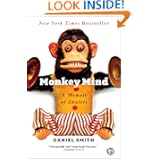
Monkey Mind
Daniel Smith's (300.02 DSM-5) struggle with a different disorder, what some of us call screaming anxiety.
Product Details
That's what it is like to have a Monkey Mind. Not fun.

Language of flowers

 There are so many languages, but until this book, who knew that sending yellow roses means something entirely different than sending red or white roses. This book is worth buying for the glossary alone. It is an amazing story about foster care. As you might suspect, being punted around as a child from one home to another isn't always the best thing for a person. But some survive, and thankfully, they know how to either tell their story, or write about it themselves.
The Language of Flowers

therapydoc


Friday, May 11, 2012

When Rules Are A Challenge

Thoughts from readers on this one would be appreciated.

Live alone, no arguments. Live social, arguments, or if you prefer, disagreements.

We can escape conflict about the thermostat and almost everything else, living alone. But it can get boring and lonely. So we try to partner up, and most of us like to go for drinks, lunch or dinner, just to be with people.  We can't all succeed at this, even when we want to.

It can be hard for some of us, socializing, because we live in a world with social expectations and rules.  To have friends we want to follow those rules to fit in, but they are often subject to change and not everyone has the innate ability to comprehend the wisdom behind them.

There are overt rules, the spoken ones, the ones written on the black board: Ask for a pass before leaving the classroom. You'll find them in the employee handbook, too: No sexual joking around with employees. 

The covert rules are assumed; you won't find them posted anywhere. Once they may have been spoken, but they are now so much a part of our social fabric that we no longer over think them, they just make sense in context. Before leaving the house, make sure to wear clothes. What sociologists call traditional roles are characterized by dozens of covert rules, rules like this one: Of course I'll make dinner while you read the paper or check your email. I'm a woman.

We like making rules, all kinds, and as soon as we're in a position to do so (think parenting, managing, teaching), we'll oblige, take full advantage, probably because we like predictability even more than we like power.  Predictability makes us less anxious.


Curfew at 11:00 for the kids.  
Morning coffee ready at 6:00 a.m. 
I’ll throw in a load of laundry if you mow the lawn. 


Must we discuss this? 

Rules take out the mystery out of life, and everyone gets to where they want to go on time.

No rules, no set objectives, less consensus no end to conflict about the way things should be. Add one extra person to a decision making process, spend hours in committee. (There is an old saying: three Jews, five opinions.)

So we work hard to make life systematic, predictable and organized. Some may grumble about it and do their own thing, and they will find like-minded others (with whom they will ultimately argue about other things, assuming their relationships are healthy). We strive, however, for a social contract full of the promises that make life sweet, a little easier to handle.  More predictable.

Or  choose to live alone.  No arguments. It is pretty hard to live life all by yourself, but you can see why people do.

It isn’t the overt rules that really get to us, so much as the covert ones, those unspoken social expectations. When we can't read people's needs it seems we're lacking in manners. But even when we do know the covert rules, meeting the expectations of others can be difficult, if not impossible.  For example we might know that at a cocktail party we should socialize, converse. If we don't, people think we're snobby.  But that's very hard for some of us.

The social lubricant of alcohol helps grease those wheels. Alcohol is even referred to as liquid courage, and is on the menu to ensure everyone is more likely to be socially lubed up. This is ironic because some of us, finally disinhibited with the help of drink, are likely to make socially unacceptable, insensitive remarks, even behave offensively, perhaps remove clothing that should stay on, or consider boxing a social sport.

Those on the autism-Asperger’s spectrum have difficulty with social cues, don't interpret body language well, nor twists of vernacular. Shipwrecked in public, no idea what to say, unable to read people, not knowing why people do what they do, they must learn to respond appropriately, to validate, repeat back what is said to them to stay on topic.

But even when they do, they still suffer a seemingly irreparable empathy deficit. Even when coached by therapists (Ask questions! Don’t talk about yourself!) they are likely to act and to feel stiff and awkward, or talk too much.

Whether (1) suffering from a disorder on the spectrum; (2) gifted with empathy but socially phobic;  or (3) embarrassed or impaired by any number of the mental/behavioral disorders, some prefer to hide in a proverbial shell, if not an unoccupied bedroom or bathroom. Understanding that the social ideal is to be schmoozing (Yiddish, rhymes with losing, means gabbing away) this can feel beyond challenging.

As a society, we're beginning to recognize that the social skill we value is not within everyone's reach.  Reading about the lives of people who survived their social issues, i.e, Look Me in the Eye by John Elder Robison, and Quiet: the Power of Introverts by Susan Cain (I haven't read that one, but it sounds marvelous) is helping. The psycho-educated are more prone to compassion, less judgmental, even those of us who like rules, who live by them.

The idea is to give the socially less smooth the benefit of the doubt. Most people need tolerance, love and friendship, and it is good for the rest of us, if we can, to provide.

The good kids, the ones who play with the kids who aren’t fitting in? They should get prizes.

The trend-- that we become aware of our differences, and forgiving, for we are so similar-- is going to continue. The ecosystem, the big one we call society, will somehow collectively worry less about conforming and raising SAT scores, more about raising psychological and emotional IQ’s, the understanding of those  differences, the importance of making fewer negative assumptions about others.

We might consider this kind of education, which is everywhere, in books, on television, on the Internet, if not so much in schools, the therapy of an entire society. The object of change--everyone.  

The dream systems intervention.

therapydoc

Transitions

   Rabbi Zev o nce  told us that a rabbi, a Jew, has to be ready to go to a funeral and then a wedding  on the same day, maybe within a few ...