I was called to consult with another therapist about a patient I didn't know the other day. The case was interesting, but I sensed the therapist was working way too hard. I thought it a valuable lesson for all of us involved in any way in this work.
The doc was really anxious to have the whole family figured out RIGHT AWAY. I flat out asked him why he needed to solve the whole thing so fast, why it was necessary to know EXACTLY what was going on so soon. He'd only seen the patient three times.
He said that he thought therapy worked that way, that you do the assessment in a couple of visits and then get to work. Fix people.
So here's how I see it. It’s true. Therapy docs, all kinds, can get a LOT of information in a few visits and can see the writing on the wall, even pictures in their heads, about where the case might go, what changes need to be made, what has gone wrong and what it will take to correct things.
Some cases, be they individual, couple, or family take longer than others. Either way, I don't see that the doc should be doing all of the work.
Indeed, it is the patient’s perception of the problem, the patient’s perception of changes, the patient’s level of awareness of the issues/problems and the patient's willingness to entertain new ideas from a TOTAL STRANGER, that will make all the difference in the outcome of any strategy or intervention.
It's not only that it's your nickel. A therapist is really a CO-INVESTIGATOR and a patient a CO-THERAPIST in the treatment process. You do have to help yourselves. The suggestions and responses that I get from my patients add immeasurably to our success.
Notice I said OUR success.
So don’t hesitate to give your opinions, peops. I know it's hard to confront an "authority figure." And I also know that many people go to therapy precisely because they have difficulty communicating what they feel.
But try, try, try to speak up if you think your therapist is off his or her rocker (or simply completely off base) in an assessment or regarding a suggestion for treatment that you just know won't work.
We rely upon you. You’re the boss. Don’t let us get away with a bunch of nonsense. The data we work with has to come from you. All we do is re-spin what we hear.
Copyright 2006, TherapyDoc
Statcounter
Tuesday, October 31, 2006

Monday, October 30, 2006
The Poster Score
When I was still wet behind the ears, back in 1983, I saw a patient, a kid that I really liked, maybe she was 20. Right, I was maybe 10 years older.
We were talking about the way her family treated her, how it was common for them (not just the parents, but the kids, too) to pick on every possible insecurity, any obvious open wound.
Maybe I told her that one of the reasons some people shy away from intimacy, why they don't self-disclose to just anyone, is that they've learned from experience not to show any weakness. They either fear exposure, being "found out," or they fear rejection or abandonment.
Maybe we talked about how when people who experience this kind of maltreatment in childhood they're a little on the sensitive side. Having been bullied, some become bullies, too. Bullies can be thin-skinned as well, but they're less overtly sensitive. They've figured it out that if they're aggressive then people will be less likely to insult them.
The best defense is a good offence? Something like that.
On with the story.
So anyway, she came to see me regularly. One day she brought out a brown paper bag from her knapsack and told me it was a present for me. Immediately I said, No, no, we don't do that here. Can't take presents. Unprofessional.
She said that it was too late to return it and opened the bag. Inside was a poster rolled up with a rubber band, an unusually sized poster. She was an artist so I thought it was a drawing perhaps, but it wasn't.
That year an anti-child abuse organization had been running a poster campaign on the Chicago busses and trains. The poster showed a really cute little blond-headed boy, about 4-5 years old, with the saddest expression on his face and a big tear rolling down his cheek.
It was in black and white. She gave me it to me.
The caption read, "Words hit as hard as a fist. Watch what you say."
She had ripped it off one of the busses and brought it to me as a present.
I felt guilty keeping it, honestly, but I LOVED it and I just couldn't bring myself to turn it in. I know, I know, I'm in trouble. But they only ran the campaign a short while, then probably ran out of money, so the posters might have ended up in the garbage any way.
And think about it. This one has been in my various offices, has survived every one of my moves since 1983.
It's stapled to the wall, and on occasion captures the attention of a certain type of individual who will wait for exactly the right moment in therapy to point up to the kid and say, in so many different ways, "That's so true."
Packs a different kind of wallop, right?
Copyright 2006, TherapyDoc
We were talking about the way her family treated her, how it was common for them (not just the parents, but the kids, too) to pick on every possible insecurity, any obvious open wound.
Maybe I told her that one of the reasons some people shy away from intimacy, why they don't self-disclose to just anyone, is that they've learned from experience not to show any weakness. They either fear exposure, being "found out," or they fear rejection or abandonment.
Maybe we talked about how when people who experience this kind of maltreatment in childhood they're a little on the sensitive side. Having been bullied, some become bullies, too. Bullies can be thin-skinned as well, but they're less overtly sensitive. They've figured it out that if they're aggressive then people will be less likely to insult them.
The best defense is a good offence? Something like that.
On with the story.
So anyway, she came to see me regularly. One day she brought out a brown paper bag from her knapsack and told me it was a present for me. Immediately I said, No, no, we don't do that here. Can't take presents. Unprofessional.
She said that it was too late to return it and opened the bag. Inside was a poster rolled up with a rubber band, an unusually sized poster. She was an artist so I thought it was a drawing perhaps, but it wasn't.
That year an anti-child abuse organization had been running a poster campaign on the Chicago busses and trains. The poster showed a really cute little blond-headed boy, about 4-5 years old, with the saddest expression on his face and a big tear rolling down his cheek.
It was in black and white. She gave me it to me.
The caption read, "Words hit as hard as a fist. Watch what you say."
She had ripped it off one of the busses and brought it to me as a present.
I felt guilty keeping it, honestly, but I LOVED it and I just couldn't bring myself to turn it in. I know, I know, I'm in trouble. But they only ran the campaign a short while, then probably ran out of money, so the posters might have ended up in the garbage any way.
And think about it. This one has been in my various offices, has survived every one of my moves since 1983.
It's stapled to the wall, and on occasion captures the attention of a certain type of individual who will wait for exactly the right moment in therapy to point up to the kid and say, in so many different ways, "That's so true."
Packs a different kind of wallop, right?
Copyright 2006, TherapyDoc
Borderline and Jealous
Switch the biological sexes and relationship labels to make them politically correct.
Like "wife" can be "partner" or "spouse."
"Man can be woman." "Woman", "man". That sort of thing.
Sometimes a guy will bring a woman to marital therapy because he's jealous and angry, ready to leave the relationship. She just wants to go out with her friends. And chutzpah of chutzpah, doesn't necessarily answer the phone. The argument is on-going.
She's very responsible when she goes out, hardly even drinks, really. She doesn't use cocaine. She comes home in a great mood, albeit late, and she might even feel sort of loving. But inevitably, he's angry.
Why? He's done this many times, comes home really drunk. She's not even coming home drunk. She's the designated driver.
While she's gone he tries hard not to picture guys hitting on her, but it's REALLY hard to do that. Worse, because she's naïve about men (at least he thinks so) he thinks she'll put herself in an uncompromising position. She's out late, very late.
What kind of a girl stays out so late, anyway?
Let me tell you. All kinds of people are out at all kinds of hours. Some people actually work midnight or late shifts, and when they're finished with their jobs it's hard for them to go right home and go to sleep. They need a life, too.
So they aren't all loose women and men closing the bars early in the morning.
Ah, he tells me. His wife doesn't work a late shift.
But, she tells him, not everyone is out to hit on her or anyone else's wife. Most people, at 2 or 3 a.m. are getting quietly sloshed.
So I talk to her and learn that indeed, she does adore her guy, and has no interest in other men or other women, for that matter. (She is out with the girls, after all).
Our guy understands that. He gets it. His rational brain tells him exactly why she's out with her friends at this hour. She didn't get to act out at all as a kid, always wanted to socialize but couldn't, and now she's all grown up and, insert expletive here, she's going to do what she wants as an adult.
You go, girl, I believe is the expression.
He tells me that he flips between loving her more than anything in the whole world and trusting her, following our visits, usually, to over the top, unstoppable, painful jealousy and rage, not caring what happens to her, wishing she'd drop dead, or at least leave him, put him out of his misery.
And all over a coupla' beers.
He himself makes the connection that it is because he loves and trusts her, because he knows that she's the one he wants for partner, mother of his children, lover, and friend, that he becomes wildly anxious when he fears she may be in the process of abandoning him, cheating on him.
What we have here is psychotic anxiety and rage that is triggered by a fear of abandonment. These fears have to be worked on, you know. You can't let them fester forever.
Anxiety that's to the point of psychotic inhibits rational thinking. One's thoughts have no basis in reality but they feel very real.
What to do?
Well, marital therapy, obviously. She has to reassure him and to develop some kind of behavioral strategy that will chill him out. And he has to work on his abandonment issues, and his impulse control, rationally go over a few of the symptoms of Borderline Personality Disorder, see if they fit. And if they do, get to work on them.
If she doesn't want to make the proverbial call to him from the bar, always had to call her mommy and can't do it anymore, she can plant a note or two in the apartment that tells him that she's looking forward to coming home late at night.
That would be CODE for something nice.
He would get it.
If she's the romantic type, then she can be obvious about it, tell him how she loves his 4 a.m. shadow, stuff like that.
In a relationship therapy I'd have her be the one to reassure him, to hold him more. It's hard, I know, to hold someone who is angry.
He has to learn, clearly, to contain that anxiety and never to display anger (we err on the exaggeration here).
For those of you who like to see the feedback loops, how behaviors and messages in marriage reinforce problems rather than "correct" them, take a look at this one.
So it makes sense to look at more than the behavior, obviously, to force the psychology, the why, here.
therapydoc
Copyright 2006
Like "wife" can be "partner" or "spouse."
"Man can be woman." "Woman", "man". That sort of thing.
Sometimes a guy will bring a woman to marital therapy because he's jealous and angry, ready to leave the relationship. She just wants to go out with her friends. And chutzpah of chutzpah, doesn't necessarily answer the phone. The argument is on-going.
She's very responsible when she goes out, hardly even drinks, really. She doesn't use cocaine. She comes home in a great mood, albeit late, and she might even feel sort of loving. But inevitably, he's angry.
Why? He's done this many times, comes home really drunk. She's not even coming home drunk. She's the designated driver.
While she's gone he tries hard not to picture guys hitting on her, but it's REALLY hard to do that. Worse, because she's naïve about men (at least he thinks so) he thinks she'll put herself in an uncompromising position. She's out late, very late.
What kind of a girl stays out so late, anyway?
Let me tell you. All kinds of people are out at all kinds of hours. Some people actually work midnight or late shifts, and when they're finished with their jobs it's hard for them to go right home and go to sleep. They need a life, too.
So they aren't all loose women and men closing the bars early in the morning.
Ah, he tells me. His wife doesn't work a late shift.
But, she tells him, not everyone is out to hit on her or anyone else's wife. Most people, at 2 or 3 a.m. are getting quietly sloshed.
So I talk to her and learn that indeed, she does adore her guy, and has no interest in other men or other women, for that matter. (She is out with the girls, after all).
Our guy understands that. He gets it. His rational brain tells him exactly why she's out with her friends at this hour. She didn't get to act out at all as a kid, always wanted to socialize but couldn't, and now she's all grown up and, insert expletive here, she's going to do what she wants as an adult.
You go, girl, I believe is the expression.
He tells me that he flips between loving her more than anything in the whole world and trusting her, following our visits, usually, to over the top, unstoppable, painful jealousy and rage, not caring what happens to her, wishing she'd drop dead, or at least leave him, put him out of his misery.
And all over a coupla' beers.
He himself makes the connection that it is because he loves and trusts her, because he knows that she's the one he wants for partner, mother of his children, lover, and friend, that he becomes wildly anxious when he fears she may be in the process of abandoning him, cheating on him.
What we have here is psychotic anxiety and rage that is triggered by a fear of abandonment. These fears have to be worked on, you know. You can't let them fester forever.
Anxiety that's to the point of psychotic inhibits rational thinking. One's thoughts have no basis in reality but they feel very real.
What to do?
Well, marital therapy, obviously. She has to reassure him and to develop some kind of behavioral strategy that will chill him out. And he has to work on his abandonment issues, and his impulse control, rationally go over a few of the symptoms of Borderline Personality Disorder, see if they fit. And if they do, get to work on them.
If she doesn't want to make the proverbial call to him from the bar, always had to call her mommy and can't do it anymore, she can plant a note or two in the apartment that tells him that she's looking forward to coming home late at night.
That would be CODE for something nice.
He would get it.
If she's the romantic type, then she can be obvious about it, tell him how she loves his 4 a.m. shadow, stuff like that.
In a relationship therapy I'd have her be the one to reassure him, to hold him more. It's hard, I know, to hold someone who is angry.
He has to learn, clearly, to contain that anxiety and never to display anger (we err on the exaggeration here).
For those of you who like to see the feedback loops, how behaviors and messages in marriage reinforce problems rather than "correct" them, take a look at this one.
Guy and his girl are doing fine, he loves her, they're not fighting. → She wants to go out with her friends to have fun and he's okay with it, not real okay, but okay. →
She goes out, has a great time, but her phone is on vibrate and she doesn't want to call him. She's talking with friends. Those of you who know how intimate friendship can be know that answering the phone can be a REAL pain if someone's in the middle of something→
His natural anxiety and insecurity begin to rise→ His thoughts go to places that reinforce his natural anxiety and insecurity, i.e., she could be hurt, raped, at that moment someone could be holding a gun to her head or touching her in places that he feels are off limits to everyone but himself→
He begins to call her every ten minutes, entertains the notion of going out to find her → His anxiety is unbearable and morphs into anger. After all, anger and anxiety use the same arousal system, the Central Nervous System. We all have one. →
His thoughts go to angry thoughts, What do I need this bitch for in my life, she's nothing but trouble, she has no respect for herself, none for our marriage, she doesn't deserve me →
He goes from that to thinking that marrying her was a really bad idea, that she isn't the one for him, that he would rather be alone than feel the way he feels, think the thoughts he's thinking →
And oh, by the way, another girl would appreciate him more in every way→ Maybe, he thinks, he should give her some of her own medicine, cheat on her, or simply not come home→
His wife comes home, he's exhausted himself with his thoughts, sleeps on the couch, doesn't even say hello to her →
He sees me the next day, tells me all of it, still really angry, by the way, ready to end the marriage→
In therapy we keep it rational, go with what's real, the fact that she adores him, it is he who can't handle the separation when she goes out, and his thoughts and emotions →
Oh, and by the way, it's not as if he doesn't give her grief. He hasn't been the perfect mate at the end of the day. →
We arrange for him to work it out with her, he leaves calm→ the whole thing starts all over again. They do fine for awhile, love each other, don't fight. →
Then she goes out and it starts all over again.
So it makes sense to look at more than the behavior, obviously, to force the psychology, the why, here.
therapydoc
Copyright 2006
Sunday, October 29, 2006
More on Control (Jewish) and Giving it Over
So LAST night I got to do one of TherapyDoc's all-time favorite Saturday night things to do. I know, you can't wait, chill out, here comes the story.
Relatives had come in from out of town, stayed over, and you know, you just have to entertain. Ordinarily F.D. and I stay home and do dishes. You knew that. We're not real exciting people.
We went to BORDERS, browsed through books and had a cup of coffee.
They have DVD's there, you know, and there was a section with old Marilyn Monroe movies, and we reminisced about the old terribly sexist stuff we used to love, and the trite plots we used to love, and mainly the music we used to love.
We were drinking coffee and singing a song that I'm pretty sure came from Carousal, but it might have been Carnival. Apparently both musicals had the same plot. Errant young man falls in love with proper young woman, goes after her. My kind of stuff.
Somehow Michael, my brother-in-law starts to sing,
When you walk, through a storm, hold your head, up high, and don't be afraid of the . . .
Dark? Storm?
At the end of the . . .dark? storm? there's a golden . . .
Sky? Bird?
And the sweet silver song of a lark. Walk on through the wind, walk on through the rain, though your dreams be . . .Walk on, Walk on, with hope in your heart. . . Cause you'll NEVER WALK ALONE. . .You'll NEVER walk alone.
Well, I break up over stuff like this, okay? First of all, the music is incredible. Secondly, the lyrics inspire strength, hope, and make the most hopeless unromantics (unromantics?) get all warm and fuzzy and romantic.
The kids these days don't know these songs. But wow, you should.
So that's not the point of this post, but I had to throw it out there and it seemed as good a place as any.
Fact is, I browsed the psychology department and gave up, seriously. There's just about EVERYTHING and ANYTHING you could ever want to know in that section with very cool titles. Not all terribly well-written or intelligible, but in print. It was truly dizzying. Don't let me go there again.
Thank G-d I'm a blogger and can read what I want on the Internet.
Which brings us to CONTROL and a Jewish story.
Remember I wrote about the Alcoholics Anonymous intervention, Let Go, Let G-d? This is one way any good addict in recovery handles a problem (or anyone who isn't an addict, for that matter, but has a spiritual program playing in their brain). It's not the only one way, but it's a good way.
The idea is that you turn a problem over to a Higher Power. So if I had an enormous property tax bill and had no idea how I was going to pay for it, I'd tell my higher power,
"Uh, Higher Power, do me a favor here. Take this one off my shoulders, help me find some way to do this so I don't go crazy worrying about it. Okay?"
Then miraculously, I'd feel better. Problem may or may not be solved, but the worry piece would disappear and theoretically, I'd not need a drink.
You may laugh, think it's dumb, etc., but it IS sublime and it does work on several levels. It is one of the better A.A. coping strategies.
So.
My mother-in-law lost her keys. I told her to search her brain. You should always search your brain. Lost things are tucked away in your hippocampus and a few other places with big names. I'm not saying things are easy to find in there, in your hippocampus, but they're there, probably covered up with a newspaper.
My m-i-l said she searched her brain but that there were too many newspapers and she had run out of time and patience and could someone just help her find her d. . . keys. I don't think she said the d… word, actually, but maybe yes.
I said, "Isn't there some Jewish formula you're supposed to say?"
Of course, J. said. "Simcha al HaNais." Translated that means, Happy about Miracles. What else could it mean?
You say Simcha al HaNais three times and get looking.
So Michael went with her to her apartment and they said Simcha al HaNais, Simcha al HaNais, Simcha al HaNais and lo and behold, they found the keys, hidden under. . .a. . . piece of paper. In plain view if you're Superman, I guess.
Now the lesson of the story is either: 1) lost items are generally found under papers, 2) Michael is really good luck and we should keep him around, 3) it helps to know Hebrew, or 4) saying over a mantra, no matter in what language, somehow helps relax the brain, lowers anxiety, and makes looking for stuff less of a hopeless, painful endeavor.
Once we relax, everything's easier.
Have a great week, peops.
Oh. P.S. I found a book on vampires that tells me that another word for vampires is Peeps. Predator something. So let's spell it Peops, Chammie. I'm not into predators.
Some of the best books are still in the Children's Section, btw.
Copyright 2006, TherapyDoc
Relatives had come in from out of town, stayed over, and you know, you just have to entertain. Ordinarily F.D. and I stay home and do dishes. You knew that. We're not real exciting people.
We went to BORDERS, browsed through books and had a cup of coffee.
They have DVD's there, you know, and there was a section with old Marilyn Monroe movies, and we reminisced about the old terribly sexist stuff we used to love, and the trite plots we used to love, and mainly the music we used to love.
We were drinking coffee and singing a song that I'm pretty sure came from Carousal, but it might have been Carnival. Apparently both musicals had the same plot. Errant young man falls in love with proper young woman, goes after her. My kind of stuff.
Somehow Michael, my brother-in-law starts to sing,
When you walk, through a storm, hold your head, up high, and don't be afraid of the . . .
Dark? Storm?
At the end of the . . .dark? storm? there's a golden . . .
Sky? Bird?
And the sweet silver song of a lark. Walk on through the wind, walk on through the rain, though your dreams be . . .Walk on, Walk on, with hope in your heart. . . Cause you'll NEVER WALK ALONE. . .You'll NEVER walk alone.
Well, I break up over stuff like this, okay? First of all, the music is incredible. Secondly, the lyrics inspire strength, hope, and make the most hopeless unromantics (unromantics?) get all warm and fuzzy and romantic.
The kids these days don't know these songs. But wow, you should.
So that's not the point of this post, but I had to throw it out there and it seemed as good a place as any.
Fact is, I browsed the psychology department and gave up, seriously. There's just about EVERYTHING and ANYTHING you could ever want to know in that section with very cool titles. Not all terribly well-written or intelligible, but in print. It was truly dizzying. Don't let me go there again.
Thank G-d I'm a blogger and can read what I want on the Internet.
Which brings us to CONTROL and a Jewish story.
Remember I wrote about the Alcoholics Anonymous intervention, Let Go, Let G-d? This is one way any good addict in recovery handles a problem (or anyone who isn't an addict, for that matter, but has a spiritual program playing in their brain). It's not the only one way, but it's a good way.
The idea is that you turn a problem over to a Higher Power. So if I had an enormous property tax bill and had no idea how I was going to pay for it, I'd tell my higher power,
"Uh, Higher Power, do me a favor here. Take this one off my shoulders, help me find some way to do this so I don't go crazy worrying about it. Okay?"
Then miraculously, I'd feel better. Problem may or may not be solved, but the worry piece would disappear and theoretically, I'd not need a drink.
You may laugh, think it's dumb, etc., but it IS sublime and it does work on several levels. It is one of the better A.A. coping strategies.
So.
My mother-in-law lost her keys. I told her to search her brain. You should always search your brain. Lost things are tucked away in your hippocampus and a few other places with big names. I'm not saying things are easy to find in there, in your hippocampus, but they're there, probably covered up with a newspaper.
My m-i-l said she searched her brain but that there were too many newspapers and she had run out of time and patience and could someone just help her find her d. . . keys. I don't think she said the d… word, actually, but maybe yes.
I said, "Isn't there some Jewish formula you're supposed to say?"
Of course, J. said. "Simcha al HaNais." Translated that means, Happy about Miracles. What else could it mean?
You say Simcha al HaNais three times and get looking.
So Michael went with her to her apartment and they said Simcha al HaNais, Simcha al HaNais, Simcha al HaNais and lo and behold, they found the keys, hidden under. . .a. . . piece of paper. In plain view if you're Superman, I guess.
Now the lesson of the story is either: 1) lost items are generally found under papers, 2) Michael is really good luck and we should keep him around, 3) it helps to know Hebrew, or 4) saying over a mantra, no matter in what language, somehow helps relax the brain, lowers anxiety, and makes looking for stuff less of a hopeless, painful endeavor.
Once we relax, everything's easier.
Have a great week, peops.
Oh. P.S. I found a book on vampires that tells me that another word for vampires is Peeps. Predator something. So let's spell it Peops, Chammie. I'm not into predators.
Some of the best books are still in the Children's Section, btw.
Copyright 2006, TherapyDoc
Thursday, October 26, 2006
The Field of Infant Mental Health
I have to comment on something that's in the news lately, briefly give over the family therapy chap (chap has a hard ch and the word rhymes with chop. It means "new idea" in yiddish, or even simply, "spin").
Taking your infant (under 2) to a psychiatrist for attachment problems is almost always, unless the baby is psychotic, which is really rare, about you and others in the baby's world, learning to attach emotionally.
All of the infant specialists are really teaching parenting.
But of course if you have a concern about autism or any other developmental disorder, check it out with a qualified mental health professional.
The infant mental health specialists, however, admit that they are mostly teaching parenting.
When they do an intervention they call the Circle of Security, "to help new parents understand their attachment to their own parents and how it affects their developing relationship with their baby" (W.S.J., Oct 24, where else?) they're addressing transgenerational issues.
Family therapists will address transgenerational issues for you at any stage of your life. You can leave your baby at home. Of course, we love infants, so bring them along, if you'd like.
But the therapy's about you and the family you came from (or your spouse's), I'm 99% sure.
So you don't have to fly out to the nearest Infant Mental Health operative.
Am I ever sorry I didn't come up with the idea, though, a Center for Infant Mental Health. What a cash cow that must be!
Copyright 2006, TherapyDoc
Taking your infant (under 2) to a psychiatrist for attachment problems is almost always, unless the baby is psychotic, which is really rare, about you and others in the baby's world, learning to attach emotionally.
All of the infant specialists are really teaching parenting.
But of course if you have a concern about autism or any other developmental disorder, check it out with a qualified mental health professional.
The infant mental health specialists, however, admit that they are mostly teaching parenting.
When they do an intervention they call the Circle of Security, "to help new parents understand their attachment to their own parents and how it affects their developing relationship with their baby" (W.S.J., Oct 24, where else?) they're addressing transgenerational issues.
Family therapists will address transgenerational issues for you at any stage of your life. You can leave your baby at home. Of course, we love infants, so bring them along, if you'd like.
But the therapy's about you and the family you came from (or your spouse's), I'm 99% sure.
So you don't have to fly out to the nearest Infant Mental Health operative.
Am I ever sorry I didn't come up with the idea, though, a Center for Infant Mental Health. What a cash cow that must be!
Copyright 2006, TherapyDoc
Speaking in Code: Marital Secret Language
Citizen of the Month posts about women. He doesn’t understand them. His wife is working in New York, he’s on the west coast, and it seems they are separated, as in separated. I don't delve.
He writes that before their anniversary he had asked her, "Do you want me to come to New York for our anniversary?"
"I have too much work."
He takes her at her word, doesn’t go, and everyone is telling him that he blew it.
I have too much work had actually meant, I'm a little tired and I could really use a little time off, and if you visit me, dear, then I can relax and not feel guilty not working, because, see, playing would be in celebration of our marriage. And everyone can appreciate that.
How was he to know?
If you are married long enough you might get it, but most people don't stay married long enough to get it when their partner is speaking in code. This goes along with figuring out sex, too, not working at it enough to get it right, but let's not digress.
Talking in code defies relationship therapy rules, ironically, yet it builds a relationship. Marital therapists stress the converse—direct, clear, obvious communication. Some of us are quoted as saying,
Err on the side of over-communication. Leave no message to chance.
We emphasize direct communication in all relationships. It is a rule:
Assume others cannot mind-read.
Talk, talk, talk. Use words—especially with intimate partners. Clarify, clarify, clarify – until your lover says, “Oh, shut up already. I get you.”
But marital code is not direct, it is indirect, thus it breaks all the rules. Best to think that the rule is:
Always look for the code. Assume there may be code. There is nothing more romantic than code.
Only the two of you can crack it, should crack it. It is not something you discuss with girlfriends at lunch. That ruins the magic entirely.
When we are speaking about love, CODE is a subset of FOREPLAY TO FOREPLAY. It is one of the many dialects of intimacy, call it Intimacy Speak. Intimacy Speak is the language intimate partners should speak all the time. No, it isn’t possible to speak intimately all of the time, but it is a level certainly worth striving to reach. Get in the habit young, and don’t look back.
Code is fun. It is an inside joke, but it belongs inside. That said, inside jokes often poke fun of others, which takes the intimacy out of them, relegates them to pseudo-intimacy, closeness that depends upon exposing the weakness of others, a lesser level. It isn’t sharing about self at all.
Inside joking, this pseudo-intimacy, can be harmful to a relationship, too. One should be careful about joking about any member’s of an intimate partner’s family. I can say to FD, "My mother is impossible," not that she is. He can't. He can’t say, “Your mother is impossible.” Now he has insulted me. My mother, my insult. I love her.
If she is impossible, and that I know that FD really loves her, only then does he have the right to tell me, Your mother is impossible. Maybe. That’s how far it goes, the language of love. Well, you know your mother, he might start out, noth that he ever has, with a smile. That would mean that we both know she's impossible, and that would be intimate. He's not insulting her, he's agreeing with me. But you have to be careful here.
What's FOREPLAY TO FOREPLAY?
If a person wants to engage in a certain type of intimacy, perhaps in the evening, or maybe the next day, then suggesting a nap would be code. But code, albeit cute, doesn’t prepare the other partner for the relaxation necessary to take a nap. One should be relaxed before napping, if napping is going to ever happen.
So foreplay to foreplay is the talking on the phone, the hello at the end of the day. It's the conciliatory behavior, the giving in, the letting go of control in the relationship, the
Sure, I'll do that for you, piece. The favor.
It's the
Wow, you look beautiful today, piece. The ego-booster.
It's the, Wear that for me tonight if you don't mind, that looks so good on you, piece. The attention.
It’s the, I'm going to come home, shower, and get to bed early, piece. The sensuous.
The, It's cold in the house and I'm going to need a blanket to watch TV, want to watch with me, piece. The seduction.
Those snippets of interactional sequences are the code in foreplay to foreplay.
Really, all of three of these terms (1) Talking in Code, (2) Foreplay to Foreplay, (3) Intimacy Speak, are interchangeable. In some families, code is essentially about aggressive behavior, not loving behavior. Clean your room, or else. Or else is code for something mean. One “f” on your report card, and you won’t see the sun. Won’t see the sun?
Some families even teach expletives to children, and insult them, teaching aggressive language by example. When it is out of control it is called verbal violence, emotional child abuse. It makes so much intuitive sense, speaking in ways that are loving, as a rule.
Bill Clinton used to say, It’s the economy, stupid, when referring to the greatest problem Americans faced today. When SPEAKING IN CODE first published on the Internet, I wrote that communication in anything other than AFFECTION SPEAK, especially employing expletives, implied aggression, verbal violence the opposite of esteeming communication. Speaking with affection speaks to the relationship, stupid, I wrote. If you want the relationship, then you learn the language. It’s that simple. I told readers that sometimes, immigrants who used Yiddish, a course language, at times, which is why it is funny, could be verbally violent and not even know it. Thus speaking foreign languages to be aggressive isn’t fooling anyone.
THE RELATIONSHIP, STUPID albeit a violent way to say it, assumes that if a couple is having intimacy issues, or if one person merely wants to connect in a physical fashion, then affection speak or code are essential ingredients.
This begins in the morning with Good morning, you stole the covers, but I took them back and it's okay, I love you anyway, (acknowledging you slept together and it was thoroughly enjoyable, or at least, enjoyable, sleeping) and continues with calls, if at all possible, or emails, texts during the day, perhaps a gift.
Or comments like, Let's not eat dinner just yet.
Right now,eyebrows raised, is definitely code.
So, Tuesday morning I start late.
What a coincidence, I do too,he says with a smile.
End of conversation.
HOW DOES ONE CREATE THIS CODE?
First, as a couple you need to have an interest in creating code.
One of you may be daunted by the quixotic nature of this pursuit. It's not a test, though. It's a game, and you want to play. Someone has to start, and communicate that his words are riddles for the other to solve. Yet there can't be too much mystery or frustration, and explanations should be ready explanations, loaded with affection.
The process of code has to be affectionate, playful.
This means you have to look soft, not hard and angry, must smile often at one another. Email should have smiley emoticons and make references to love.
Clarity is code means agreement that when one partner says X, the other will know it means Y.
For example,
X: My tennis elbow hurts, I'm going to go lie down. is code for
Y: I'd love some horizontal company right now.
Tennis elbow never goes away, so this will work for years. No one has to lie down for tennis elbow. Horizontal, by the way, is code.
Sometimes it's not what's said, it's what is not said. The raising of the eyebrow is the not said and is extremely key.
And when it is said, it's how it is said, with emphasis on syllables, smiles, and good eye contact. Eye contact that searches is so intimate. A little invasive, thus it is reserved for mutually exclusive intimacy.
Finally, a very easy way to speak in code is to speak in first letters only. When I teach this in therapy I just start people off by using the first letters only to refer to something.
Therapist: Now that’s GC!
Couple (as one): Huh?
Me: GC. You tell me, based upon your last interchange. What's GC?
He looks at her, she looks at him; they feel silly. Someone rolls eyes.
One partner, speaking for the team: We give up.
Therapist: Good communication. GC.
Other partner: Sure. We knew that (sideways glance to the other). Right, Doc.
It is a joke, but we will use GC in the future, and therapy, is a little less stressful for the inside joke.
They are taught to use GC outside of therapy, and to embellish it, as in:
Partner One: Last night was CGS.
Partner Two: Huh?
Partner One: Crazy Good, uh, Spaghetti.
Secret language is thinking outside the box, but if it is too abstract thinker, if it is misunderstood, it can undermine the cause. Too little communication, like too much, is distracting.
A run-on post (like this one) loses readers who want to say, "I don't know what the blank you're talking about, TD,” and some do. A good blogger makes changes or cuts because criticism sets some of us free.
Developmental theorists love to talk about a leap in childhood when a child begins to think beyond what is said. A young child hears, "Your dad has rocks in his head," and the child will look for rocks, wonder where they are. This is concrete thinking.
When some of us hear code, we first go to the concrete meaning of what is said. I’m going to take a little nap is read as wanting to sleep, not wanting to make love. The developmental leap in adulthood is to read more into communication, not less.
Thus eye contact, a raised eyebrow, a pregnant pause—all necessary in good code.
FD likes puns. He'll leave a pause between a pun to see if I can catch it before he asks, Get it? Decoding puns is not fun for me and it has taken many years to even try, but it is something he likes to do, so being a good sport, I’ll play with him like that.
Did you see what I did there?
But back to our blogger, the one who didn't know he was supposed to go to New York, who didn’t know what to give her for a present, or even if she wanted a present.
You’re supposed to speak in code, dear. You’re supposed to say, “Do you want anything special for your anniversary?”
Oh yeah, Pig Latin REALLY IS code. Whatever works, okay?
Copyright 2006, TherapyDoc
He writes that before their anniversary he had asked her, "Do you want me to come to New York for our anniversary?"
"I have too much work."
He takes her at her word, doesn’t go, and everyone is telling him that he blew it.
I have too much work had actually meant, I'm a little tired and I could really use a little time off, and if you visit me, dear, then I can relax and not feel guilty not working, because, see, playing would be in celebration of our marriage. And everyone can appreciate that.
How was he to know?
If you are married long enough you might get it, but most people don't stay married long enough to get it when their partner is speaking in code. This goes along with figuring out sex, too, not working at it enough to get it right, but let's not digress.
Talking in code defies relationship therapy rules, ironically, yet it builds a relationship. Marital therapists stress the converse—direct, clear, obvious communication. Some of us are quoted as saying,
Err on the side of over-communication. Leave no message to chance.
We emphasize direct communication in all relationships. It is a rule:
Assume others cannot mind-read.
Talk, talk, talk. Use words—especially with intimate partners. Clarify, clarify, clarify – until your lover says, “Oh, shut up already. I get you.”
But marital code is not direct, it is indirect, thus it breaks all the rules. Best to think that the rule is:
Always look for the code. Assume there may be code. There is nothing more romantic than code.
Only the two of you can crack it, should crack it. It is not something you discuss with girlfriends at lunch. That ruins the magic entirely.
When we are speaking about love, CODE is a subset of FOREPLAY TO FOREPLAY. It is one of the many dialects of intimacy, call it Intimacy Speak. Intimacy Speak is the language intimate partners should speak all the time. No, it isn’t possible to speak intimately all of the time, but it is a level certainly worth striving to reach. Get in the habit young, and don’t look back.
Code is fun. It is an inside joke, but it belongs inside. That said, inside jokes often poke fun of others, which takes the intimacy out of them, relegates them to pseudo-intimacy, closeness that depends upon exposing the weakness of others, a lesser level. It isn’t sharing about self at all.
Inside joking, this pseudo-intimacy, can be harmful to a relationship, too. One should be careful about joking about any member’s of an intimate partner’s family. I can say to FD, "My mother is impossible," not that she is. He can't. He can’t say, “Your mother is impossible.” Now he has insulted me. My mother, my insult. I love her.
If she is impossible, and that I know that FD really loves her, only then does he have the right to tell me, Your mother is impossible. Maybe. That’s how far it goes, the language of love. Well, you know your mother, he might start out, noth that he ever has, with a smile. That would mean that we both know she's impossible, and that would be intimate. He's not insulting her, he's agreeing with me. But you have to be careful here.
What's FOREPLAY TO FOREPLAY?
If a person wants to engage in a certain type of intimacy, perhaps in the evening, or maybe the next day, then suggesting a nap would be code. But code, albeit cute, doesn’t prepare the other partner for the relaxation necessary to take a nap. One should be relaxed before napping, if napping is going to ever happen.
So foreplay to foreplay is the talking on the phone, the hello at the end of the day. It's the conciliatory behavior, the giving in, the letting go of control in the relationship, the
Sure, I'll do that for you, piece. The favor.
It's the
Wow, you look beautiful today, piece. The ego-booster.
It's the, Wear that for me tonight if you don't mind, that looks so good on you, piece. The attention.
It’s the, I'm going to come home, shower, and get to bed early, piece. The sensuous.
The, It's cold in the house and I'm going to need a blanket to watch TV, want to watch with me, piece. The seduction.
Those snippets of interactional sequences are the code in foreplay to foreplay.
Really, all of three of these terms (1) Talking in Code, (2) Foreplay to Foreplay, (3) Intimacy Speak, are interchangeable. In some families, code is essentially about aggressive behavior, not loving behavior. Clean your room, or else. Or else is code for something mean. One “f” on your report card, and you won’t see the sun. Won’t see the sun?
Some families even teach expletives to children, and insult them, teaching aggressive language by example. When it is out of control it is called verbal violence, emotional child abuse. It makes so much intuitive sense, speaking in ways that are loving, as a rule.
Bill Clinton used to say, It’s the economy, stupid, when referring to the greatest problem Americans faced today. When SPEAKING IN CODE first published on the Internet, I wrote that communication in anything other than AFFECTION SPEAK, especially employing expletives, implied aggression, verbal violence the opposite of esteeming communication. Speaking with affection speaks to the relationship, stupid, I wrote. If you want the relationship, then you learn the language. It’s that simple. I told readers that sometimes, immigrants who used Yiddish, a course language, at times, which is why it is funny, could be verbally violent and not even know it. Thus speaking foreign languages to be aggressive isn’t fooling anyone.
THE RELATIONSHIP, STUPID albeit a violent way to say it, assumes that if a couple is having intimacy issues, or if one person merely wants to connect in a physical fashion, then affection speak or code are essential ingredients.
This begins in the morning with Good morning, you stole the covers, but I took them back and it's okay, I love you anyway, (acknowledging you slept together and it was thoroughly enjoyable, or at least, enjoyable, sleeping) and continues with calls, if at all possible, or emails, texts during the day, perhaps a gift.
Or comments like, Let's not eat dinner just yet.
Right now,eyebrows raised, is definitely code.
So, Tuesday morning I start late.
What a coincidence, I do too,he says with a smile.
End of conversation.
HOW DOES ONE CREATE THIS CODE?
First, as a couple you need to have an interest in creating code.
One of you may be daunted by the quixotic nature of this pursuit. It's not a test, though. It's a game, and you want to play. Someone has to start, and communicate that his words are riddles for the other to solve. Yet there can't be too much mystery or frustration, and explanations should be ready explanations, loaded with affection.
The process of code has to be affectionate, playful.
This means you have to look soft, not hard and angry, must smile often at one another. Email should have smiley emoticons and make references to love.
Clarity is code means agreement that when one partner says X, the other will know it means Y.
For example,
X: My tennis elbow hurts, I'm going to go lie down. is code for
Y: I'd love some horizontal company right now.
Tennis elbow never goes away, so this will work for years. No one has to lie down for tennis elbow. Horizontal, by the way, is code.
Sometimes it's not what's said, it's what is not said. The raising of the eyebrow is the not said and is extremely key.
And when it is said, it's how it is said, with emphasis on syllables, smiles, and good eye contact. Eye contact that searches is so intimate. A little invasive, thus it is reserved for mutually exclusive intimacy.
Finally, a very easy way to speak in code is to speak in first letters only. When I teach this in therapy I just start people off by using the first letters only to refer to something.
Therapist: Now that’s GC!
Couple (as one): Huh?
Me: GC. You tell me, based upon your last interchange. What's GC?
He looks at her, she looks at him; they feel silly. Someone rolls eyes.
One partner, speaking for the team: We give up.
Therapist: Good communication. GC.
Other partner: Sure. We knew that (sideways glance to the other). Right, Doc.
It is a joke, but we will use GC in the future, and therapy, is a little less stressful for the inside joke.
They are taught to use GC outside of therapy, and to embellish it, as in:
Partner One: Last night was CGS.
Partner Two: Huh?
Partner One: Crazy Good, uh, Spaghetti.
Secret language is thinking outside the box, but if it is too abstract thinker, if it is misunderstood, it can undermine the cause. Too little communication, like too much, is distracting.
A run-on post (like this one) loses readers who want to say, "I don't know what the blank you're talking about, TD,” and some do. A good blogger makes changes or cuts because criticism sets some of us free.
Developmental theorists love to talk about a leap in childhood when a child begins to think beyond what is said. A young child hears, "Your dad has rocks in his head," and the child will look for rocks, wonder where they are. This is concrete thinking.
When some of us hear code, we first go to the concrete meaning of what is said. I’m going to take a little nap is read as wanting to sleep, not wanting to make love. The developmental leap in adulthood is to read more into communication, not less.
Thus eye contact, a raised eyebrow, a pregnant pause—all necessary in good code.
FD likes puns. He'll leave a pause between a pun to see if I can catch it before he asks, Get it? Decoding puns is not fun for me and it has taken many years to even try, but it is something he likes to do, so being a good sport, I’ll play with him like that.
Did you see what I did there?
But back to our blogger, the one who didn't know he was supposed to go to New York, who didn’t know what to give her for a present, or even if she wanted a present.
You’re supposed to speak in code, dear. You’re supposed to say, “Do you want anything special for your anniversary?”
Oh yeah, Pig Latin REALLY IS code. Whatever works, okay?
Copyright 2006, TherapyDoc
Monday, October 23, 2006
It's a WE thing: More on BLAME or You Stole the Covers
I've talked about blame before, but here's a little reinforcement and maybe another way of looking at it.
Last night G.D. and I went to sleep a little late. It was kind of cold in the house. (I WILL TURN UP THE HEAT, I WILL TURN UP THE HEAT, I WILL TURN UP THE HEAT).
But we went to sleep. G.D. had most of the covers, no question, yet I said to myself, You're tired enough, you'll sleep, leave him alone. He had conked out.
I fell asleep, too, woke up a couple of hours later and did what I usually do when I wake up early, which is to say I got out of bed, made some Tension Tamer tea, and did a little writing.
When my eyes couldn't see straight I went back to bed. It was only around 3:30.
He stirred, said hello. He's a light sleeper, probably from years and years of having to attend to a vibrating beeper on the night stand. He immediately conceded that he did indeed have most of the covers, rectified the situation by covering me up.
He went right back to sleep. But I felt hungry. And my feet were cold (they're far away from the core organs), and he had started to snore, something he rarely does.
Then, of all things, a terrible song snuck into my head and I couldn't lose it. For a really funny post on songs in your head and sleeping, you must read Fish and Family. I think it's October 19 or around there.
So I stayed in bed miserable for awhile, knowing that I'd never fall asleep with cold feet, and summoned up strength, and got up to get a pair of socks.
Finally socked and properly covered, I told him he HAD to roll over, which he did. The song disappeared, and eventually I hit dreamland.
I know what you're thinking. This post is not about sex. Okay, you're right, it could have been, but it's not, okay?
Got up late, 8 o'clock. Went down for a cup of coffee.
G.D. grinds his own Star Bucks and the coffee does not disappoint. Zapped the milk, poured the coffee juice, inhaled deeply and sipped a lot down, added more, brought it upstairs and started making the bed. G.D. appeared at the bedroom door.
Me: No wonder we couldn't sleep, or should I say, I couldn't sleep. Look at this, G.D. The top sheet was on all wrong.
G.D.: Oh, that was my fault. I put on the top sheet.
Me: Honey, WE made the bed. It was a WE thing. Could you stop with the blame, please?
He shrugged, but he got it. I think. It's hard to get blaming words and phrases such as, my fault, your fault, out of the marital lexicon, but it's a good thing to work on. This goes along with the 51% solution, the idea of positive versus negative communication.
I think that we have to make most marital interaction, especially discussion about problems, issues, and bumps into We Things whenever we can. When it's Us it can't be bad, right?
Oh, and it's a lot more romantic, too.
I don't care how you were raised. You can change this one, assuming the sock fits.
Copyright 2006, Therapydoc
Last night G.D. and I went to sleep a little late. It was kind of cold in the house. (I WILL TURN UP THE HEAT, I WILL TURN UP THE HEAT, I WILL TURN UP THE HEAT).
But we went to sleep. G.D. had most of the covers, no question, yet I said to myself, You're tired enough, you'll sleep, leave him alone. He had conked out.
I fell asleep, too, woke up a couple of hours later and did what I usually do when I wake up early, which is to say I got out of bed, made some Tension Tamer tea, and did a little writing.
When my eyes couldn't see straight I went back to bed. It was only around 3:30.
He stirred, said hello. He's a light sleeper, probably from years and years of having to attend to a vibrating beeper on the night stand. He immediately conceded that he did indeed have most of the covers, rectified the situation by covering me up.
He went right back to sleep. But I felt hungry. And my feet were cold (they're far away from the core organs), and he had started to snore, something he rarely does.
Then, of all things, a terrible song snuck into my head and I couldn't lose it. For a really funny post on songs in your head and sleeping, you must read Fish and Family. I think it's October 19 or around there.
So I stayed in bed miserable for awhile, knowing that I'd never fall asleep with cold feet, and summoned up strength, and got up to get a pair of socks.
Finally socked and properly covered, I told him he HAD to roll over, which he did. The song disappeared, and eventually I hit dreamland.
I know what you're thinking. This post is not about sex. Okay, you're right, it could have been, but it's not, okay?
Got up late, 8 o'clock. Went down for a cup of coffee.
G.D. grinds his own Star Bucks and the coffee does not disappoint. Zapped the milk, poured the coffee juice, inhaled deeply and sipped a lot down, added more, brought it upstairs and started making the bed. G.D. appeared at the bedroom door.
Me: No wonder we couldn't sleep, or should I say, I couldn't sleep. Look at this, G.D. The top sheet was on all wrong.
G.D.: Oh, that was my fault. I put on the top sheet.
Me: Honey, WE made the bed. It was a WE thing. Could you stop with the blame, please?
He shrugged, but he got it. I think. It's hard to get blaming words and phrases such as, my fault, your fault, out of the marital lexicon, but it's a good thing to work on. This goes along with the 51% solution, the idea of positive versus negative communication.
I think that we have to make most marital interaction, especially discussion about problems, issues, and bumps into We Things whenever we can. When it's Us it can't be bad, right?
Oh, and it's a lot more romantic, too.
I don't care how you were raised. You can change this one, assuming the sock fits.
Copyright 2006, Therapydoc
Saturday, October 21, 2006
He Drinks, She Drinks
What would I do without my Wall Street Journal?
Cover story of the Saturday Pursuit (style) Section:
He Drinks, She Drinks.
A story after my own heart. The gender-fication of alcoholic beverages.
There are male drinks, and female drinks, and it's okay for females to drink male drinks (scotch, bourbon, anything straight up), but it is SO NOT OKAY for men to drink Cosmos, Manhattans, Daiquiris. . . women drinks. You get it.
Anything with a hint of pink or cranberry.
But it's okay that women know the nuances of shades of malt.
I'll say it once. Women get sicker, quicker.
We are susceptible to the cancers, the liver disease, more susceptible than our biological converses, males.
I am going to venture a guess, however, that it has something to do with our estrogen and how our fat cells (estrogen's to blame) absorb the toxins of booze. It really doesn't matter why, because statistically, women go down the tubes physiologically over time if they drink too much alcohol. We get sick in our forties if we don't watch it, whereas the guys eek it out longer.
The point of this is to say, really, that it doesn't matter if it's Canadian straight up (thank you) or a Cosmo, Manhattan, etc. It's all the same to your gut.
One of my favorite psychiatric consultants, who never drank at all, not a drop said: "Alcohol is the enemy. In our profession, alcohol is the enemy." That was 30 years ago. I never forgot it and I still repeat it often.
When I see people for alcohol abuse it's because of the trouble that followed a night out, like finding they don't know the person they wake up to in the morning. Women, particularly, hate when this happens. It can cause problems jumping from partner to partner.
A little math lesson: 2 oz of hard liquor = 12 oz of beer, = 6 oz. of wine. The sugary drinks are worse because the sugar zips the alcohol into the blood stream. All of the mixed sugared drinks can feel like doubles. This also blows the, "I only drink beer" fable out of the water. 4 beers = 4 shots.
For most people, a drink or two won't do any damage at all. But who do you know who goes out for a drink or two?
Which is fine if it didn't impair cognition. Getting high with any substance drives the really bad decisions. The dis-inhibition, so liberating at the time, doesn't feel good the next day, when you remember what you did the night before. With whom.
Of course, if you have black outs, you won't remember what you did the night before. Your friends will tell you, assuming they didn't black out, too.
And I don't mind listening, of course, that's what I'm there for. But it's a shame we have to learn so many lessons the hard way.
Copyright 2006, TherapyDoc
Cover story of the Saturday Pursuit (style) Section:
He Drinks, She Drinks.
A story after my own heart. The gender-fication of alcoholic beverages.
There are male drinks, and female drinks, and it's okay for females to drink male drinks (scotch, bourbon, anything straight up), but it is SO NOT OKAY for men to drink Cosmos, Manhattans, Daiquiris. . . women drinks. You get it.
Anything with a hint of pink or cranberry.
But it's okay that women know the nuances of shades of malt.
I'll say it once. Women get sicker, quicker.
We are susceptible to the cancers, the liver disease, more susceptible than our biological converses, males.
I am going to venture a guess, however, that it has something to do with our estrogen and how our fat cells (estrogen's to blame) absorb the toxins of booze. It really doesn't matter why, because statistically, women go down the tubes physiologically over time if they drink too much alcohol. We get sick in our forties if we don't watch it, whereas the guys eek it out longer.
The point of this is to say, really, that it doesn't matter if it's Canadian straight up (thank you) or a Cosmo, Manhattan, etc. It's all the same to your gut.
One of my favorite psychiatric consultants, who never drank at all, not a drop said: "Alcohol is the enemy. In our profession, alcohol is the enemy." That was 30 years ago. I never forgot it and I still repeat it often.
When I see people for alcohol abuse it's because of the trouble that followed a night out, like finding they don't know the person they wake up to in the morning. Women, particularly, hate when this happens. It can cause problems jumping from partner to partner.
A little math lesson: 2 oz of hard liquor = 12 oz of beer, = 6 oz. of wine. The sugary drinks are worse because the sugar zips the alcohol into the blood stream. All of the mixed sugared drinks can feel like doubles. This also blows the, "I only drink beer" fable out of the water. 4 beers = 4 shots.
For most people, a drink or two won't do any damage at all. But who do you know who goes out for a drink or two?
Which is fine if it didn't impair cognition. Getting high with any substance drives the really bad decisions. The dis-inhibition, so liberating at the time, doesn't feel good the next day, when you remember what you did the night before. With whom.
Of course, if you have black outs, you won't remember what you did the night before. Your friends will tell you, assuming they didn't black out, too.
And I don't mind listening, of course, that's what I'm there for. But it's a shame we have to learn so many lessons the hard way.
Copyright 2006, TherapyDoc
Friday, October 20, 2006
Bill Simmons on ESPN Page 2 Mets Sports Suicide
Bill Simmons, a writer for ESPN tells over the following snip following the Cardinal win over the Mets in Game 7.
8:50 -- Someone calls me. I look at the caller ID and see it's my buddy Sal's house, so I pick up to talk him off the ledge. Instead, it's his wife (not a sports fan) calling to get tips for dealing with her distraught husband from the Sports Gal. We end up having this impromptu exchange: Her (sounding slightly scared): "Bill? What do I do?"
Me: "Is Sal there right now?"
Her: "Yeah. I don't know what to do."
Me: "Don't try to make him feel better. Stay away from him."
Her: "Really?"
Me: "Yeah. Stay away for the rest of the night. Let him stew over this for a couple of hours. Go into your room and read or something. Let him initiate the first conversation."
Her: "OK." You have to admit, there's nothing quite like sports.
Now I have to tell you guys, I couldn't have said it better. I personally know what it's like to feel horrible when your team loses by a hair (the Bartman ball of the 2003 play-off had us all crying in our soup, and a little homicidal, too-- where is Bartman?)
But Bill Simmons knows his stuff. This is exactly how you deal with people in mourning. You give them space, you let them talk first, and if they're not ready, wait them out.
Can't wait for the World Series.
Bill's new book "Now I Can Die In Peace" is available on Amazon.com and in bookstores everywhere.
8:50 -- Someone calls me. I look at the caller ID and see it's my buddy Sal's house, so I pick up to talk him off the ledge. Instead, it's his wife (not a sports fan) calling to get tips for dealing with her distraught husband from the Sports Gal. We end up having this impromptu exchange: Her (sounding slightly scared): "Bill? What do I do?"
Me: "Is Sal there right now?"
Her: "Yeah. I don't know what to do."
Me: "Don't try to make him feel better. Stay away from him."
Her: "Really?"
Me: "Yeah. Stay away for the rest of the night. Let him stew over this for a couple of hours. Go into your room and read or something. Let him initiate the first conversation."
Her: "OK." You have to admit, there's nothing quite like sports.
Now I have to tell you guys, I couldn't have said it better. I personally know what it's like to feel horrible when your team loses by a hair (the Bartman ball of the 2003 play-off had us all crying in our soup, and a little homicidal, too-- where is Bartman?)
But Bill Simmons knows his stuff. This is exactly how you deal with people in mourning. You give them space, you let them talk first, and if they're not ready, wait them out.
Can't wait for the World Series.
Bill's new book "Now I Can Die In Peace" is available on Amazon.com and in bookstores everywhere.
Thursday, October 19, 2006
Humiliating Others-Deliberate Abuse that Cuts Deep
No one would argue that people who have suffered from emotional, psychological, verbal, sexual, or physical abuse have issues.
Having fallen victim to aggression, they sometimes believe what an aggressor has said. They might believe, for example, that they deserved the psychotic angry rage, that they even provoked it. Believing this is having fallen under the hypnotic persuasion of the aggressor, a person who wants the victim to feel badly, wants her to hurt. (yeah, it's usually a her)
If you think you deserve to be hurt by others, then your self-esteem is low. This is characteristic of people who have grown up in abusive families. In therapy such folks describe feeling "less-than" in many different ways with many different adjectives: inferior, stupid, ugly, powerless, every negative attribute imaginable.
And there I sit, looking at these beautiful, intelligent, sensitive people who think they're garbage. It kills me.
Anyway,
These negative self-attributes are the meat of low self-esteem. An older generation of psychotherapists called it the "bad self."
Thinking they must have deserved the abuse (for victims of abuse have been told this so many times that it has become a hypnotic suggestion), survivors, meaning those who got out of childhood alive, are at risk to become people like the people who abused them.
Many of them identify with the aggressor, become an aggressor.
Why would anyone do that? Surely victims disdain violence, hate the people who abused them, and hate what they stand for.
One would think, but not always. It's just safer, is all, to err on the side of what one perceives to be strength, power.
An abused person can be persuaded into believing that if a parent is strong and mean, then it is strength and meanness are respectable traits. People want to loved, especially by their parents. Our personalities are shaped during a time of life when we don't know very much more than what our parents tell us is true. We conclude things about ourselves based upon how we are treated and based upon what they say.
Those who become violent are convinced, at some point in their psychological development, that that the world is divided up between the strong and the weak. And they'd rather be strong.
They see that strength as the power to bully. It is what is needed to be on top in the hierarchy of power that they see in all relationships. Others are unaware of this hierarchy of power, the weak versus the strong, or don't care.
To feel on top, "survivors" take satisfaction, even joy, in the humiliation of others. This is definitive schadenfreude, enjoying the suffering of others. Their psychological work is to master their own sense of powerlessness, having been humiliated and abused themselves. So they choose strength, dominance.
Therapists like me teach people that it is much harder to contain anger, to manage aggression, than it is to let it go.
No doubt, however, it is easier and it feels better, it's even cathartic, to let insults and fists fly. It's a lot harder to communicate rationally with logic and persuasion.
People who have been badly abused can be terrible at logic, persuasion, negotiation and verbal expression of feeling.
They weren't entitled to it as children, didn't practice it; nobody asked them for their opinions. They were told what to do, and generally had no decision making power or power at all, for that matter, in their families of origin.
When they feel intense anger it is a mixture of near-psychotic anxiety and fear that has to be purged in the only way that they know how. If the opportunity presents to take that rage and anxiety out on someone, to bring someone down, this relieves this disproportionate affect and functions not to merely level the playing field in their perverse hierarchical thinking, but to bring themselves up to the top of the pyramid.
This lording something over someone, humiliating, hurting someone, feels great to certain insecure people. For those with self-esteem, it feels mean.
That's how badly having been abused can affect one's personality, behavior, and every relationship. Sucks to be them, in the vernacular of our youth?
Well, yeah. But you get them at the right time, the right place in their lives, and they're educable.
Everyone can change.
Copyright 2006, TherapyDoc
Having fallen victim to aggression, they sometimes believe what an aggressor has said. They might believe, for example, that they deserved the psychotic angry rage, that they even provoked it. Believing this is having fallen under the hypnotic persuasion of the aggressor, a person who wants the victim to feel badly, wants her to hurt. (yeah, it's usually a her)
If you think you deserve to be hurt by others, then your self-esteem is low. This is characteristic of people who have grown up in abusive families. In therapy such folks describe feeling "less-than" in many different ways with many different adjectives: inferior, stupid, ugly, powerless, every negative attribute imaginable.
And there I sit, looking at these beautiful, intelligent, sensitive people who think they're garbage. It kills me.
Anyway,
These negative self-attributes are the meat of low self-esteem. An older generation of psychotherapists called it the "bad self."
Thinking they must have deserved the abuse (for victims of abuse have been told this so many times that it has become a hypnotic suggestion), survivors, meaning those who got out of childhood alive, are at risk to become people like the people who abused them.
Many of them identify with the aggressor, become an aggressor.
Why would anyone do that? Surely victims disdain violence, hate the people who abused them, and hate what they stand for.
One would think, but not always. It's just safer, is all, to err on the side of what one perceives to be strength, power.
An abused person can be persuaded into believing that if a parent is strong and mean, then it is strength and meanness are respectable traits. People want to loved, especially by their parents. Our personalities are shaped during a time of life when we don't know very much more than what our parents tell us is true. We conclude things about ourselves based upon how we are treated and based upon what they say.
Those who become violent are convinced, at some point in their psychological development, that that the world is divided up between the strong and the weak. And they'd rather be strong.
They see that strength as the power to bully. It is what is needed to be on top in the hierarchy of power that they see in all relationships. Others are unaware of this hierarchy of power, the weak versus the strong, or don't care.
To feel on top, "survivors" take satisfaction, even joy, in the humiliation of others. This is definitive schadenfreude, enjoying the suffering of others. Their psychological work is to master their own sense of powerlessness, having been humiliated and abused themselves. So they choose strength, dominance.
Therapists like me teach people that it is much harder to contain anger, to manage aggression, than it is to let it go.
No doubt, however, it is easier and it feels better, it's even cathartic, to let insults and fists fly. It's a lot harder to communicate rationally with logic and persuasion.
People who have been badly abused can be terrible at logic, persuasion, negotiation and verbal expression of feeling.
They weren't entitled to it as children, didn't practice it; nobody asked them for their opinions. They were told what to do, and generally had no decision making power or power at all, for that matter, in their families of origin.
When they feel intense anger it is a mixture of near-psychotic anxiety and fear that has to be purged in the only way that they know how. If the opportunity presents to take that rage and anxiety out on someone, to bring someone down, this relieves this disproportionate affect and functions not to merely level the playing field in their perverse hierarchical thinking, but to bring themselves up to the top of the pyramid.
This lording something over someone, humiliating, hurting someone, feels great to certain insecure people. For those with self-esteem, it feels mean.
That's how badly having been abused can affect one's personality, behavior, and every relationship. Sucks to be them, in the vernacular of our youth?
Well, yeah. But you get them at the right time, the right place in their lives, and they're educable.
Everyone can change.
Copyright 2006, TherapyDoc
Wednesday, October 18, 2006
Using your friends' Jokes
we may as well go all the way.
I need jokes.
Genius Doc started me off tonight (it wasn't bad enough that it took all my energy not to burst into that silly song all day long, Walking on Sunshine, see post below this one.
See listening to music's a coping strategy and so is keeping it light, telling jokes.
Here's G.D.'s.
Setting: We're in the car, I've just picked him up from work, it's been a long day and I'm not concentrating on what he's saying (but I'm trying, I'm hungry)
G.D.: Today I saw a Cleopatrian.
T.D.: Oh.
G.D.: Yeah, it was interesting.
T.D.: Wait. . .What's a... Cleopatrian?
G.D.: You of all people should know what a Cleopatrian is.
T.D.: No, seriously. I don't. (I'm thinking it must be something sexual, flashing on how Elizabeth Taylor filled out her low-cut dress in that movie with Richard Burton.)
G.D.: You really don't know?
T.D.: Tell me.
G.D.: A Cleopatrian is a Queen of Denial.
Groan.
But this is a good intro to the next post which will be. . .Speaking in Code. I so can't wait.
Oh, send me some good jokes. And keep 'm clean. (for me, mainly)
T.D.
I need jokes.
Genius Doc started me off tonight (it wasn't bad enough that it took all my energy not to burst into that silly song all day long, Walking on Sunshine, see post below this one.
See listening to music's a coping strategy and so is keeping it light, telling jokes.
Here's G.D.'s.
Setting: We're in the car, I've just picked him up from work, it's been a long day and I'm not concentrating on what he's saying (but I'm trying, I'm hungry)
G.D.: Today I saw a Cleopatrian.
T.D.: Oh.
G.D.: Yeah, it was interesting.
T.D.: Wait. . .What's a... Cleopatrian?
G.D.: You of all people should know what a Cleopatrian is.
T.D.: No, seriously. I don't. (I'm thinking it must be something sexual, flashing on how Elizabeth Taylor filled out her low-cut dress in that movie with Richard Burton.)
G.D.: You really don't know?
T.D.: Tell me.
G.D.: A Cleopatrian is a Queen of Denial.
Groan.
But this is a good intro to the next post which will be. . .Speaking in Code. I so can't wait.
Oh, send me some good jokes. And keep 'm clean. (for me, mainly)
T.D.
Walking on Sunshine
I just hate that readers might think I'm a little old.
No, right?
But just so you should KNOW, my kids say that I like contemporary music, too. Thus I am officially recommending it as a coping strategy with the following caveat:
LISTEN TO HAPPY MUSIC, NOT SAD MUSIC WHEN YOU'RE DOWN. When you're okay, sad music is fine. But yes, it might bring you down. So use with caution.
I choose foot tapping stuff and almost anything with the word "Kiss". I like "GLORIA", "CALL ME", and "MY FAVORITE THINGS".
The other day I heard a song I'd never heard before and am recommending it to you with a link to the music video. It totally woke me up, started the day off with a smile and a jump and good attitude.
Check out the music video link below and ignore the guy opening the packet of cocaine, okay? He's totally wrong. (Was that cocaine?)
Walking on Sunshine
Oh, and yes, I'm taking recommendations for songs you like in the Comments.
Do your best, peeps.
Sometimes Fish and Family also makes recommendations on her "Tunes I'm Hummin' " on a sidebar.
TherapyDoc (T.D.)
No, right?
But just so you should KNOW, my kids say that I like contemporary music, too. Thus I am officially recommending it as a coping strategy with the following caveat:
LISTEN TO HAPPY MUSIC, NOT SAD MUSIC WHEN YOU'RE DOWN. When you're okay, sad music is fine. But yes, it might bring you down. So use with caution.
I choose foot tapping stuff and almost anything with the word "Kiss". I like "GLORIA", "CALL ME", and "MY FAVORITE THINGS".
The other day I heard a song I'd never heard before and am recommending it to you with a link to the music video. It totally woke me up, started the day off with a smile and a jump and good attitude.
Check out the music video link below and ignore the guy opening the packet of cocaine, okay? He's totally wrong. (Was that cocaine?)
Walking on Sunshine
Oh, and yes, I'm taking recommendations for songs you like in the Comments.
Do your best, peeps.
Sometimes Fish and Family also makes recommendations on her "Tunes I'm Hummin' " on a sidebar.
TherapyDoc (T.D.)
Alcoholics Anonymous (A. A.) and W.S.J.
Alternatively titled, This Doc Says Thumbs Up When it Comes to A.A.
I'm going to say it. I know it sounds hokey. But some of the best people I've ever met in therapy (patients of mine) have been people who got sober in Alcoholics Anonymous.
What makes someone "best?" And what's W.S.J. got to do with A.A.?
I think of people as "best" when they give back, work hard, think of others, delay gratification, know how to appreciate and use their own gifts, and know what it means to be grateful to be alive. I could add to the list, I guess, but those are starter goals for humans.
Okay, the W.S.J. is the Wall Street Journal. W.S.J. just published in defense of A.A., Alcoholics Anonymous, since A.A. supposedly needed defending. The scientific community has been hankering for the A.A. program to be evidence-based, meaning proven effective scientifically, preferably with double-blind social science experiments.
A.A. members can't participate in double-blind studies because they're in it for the anonymity. There are no lists of members. Oh, and they want to get better, probably, not play around as guinea pigs.
Why does the scientific community have to prove interventions such as A.A. to be evidence-based (or not)? Social science research justifies spending on interventions and programs.
But Alcoholics Anonymous actually costs NOTHING, as the article points out. Revenue from books and charitable contributions last year amounted to 13.2 million. Expenses were 12.9 million (according to W.S.J.) Not particularly a high roller business, you know?
The Journal also mentions that alcoholics who go to therapy and also go to A.A. have three times the abstinence rate of people who go to therapy and don't go to A.A. Way to go, W.S.J. Substantiates what I've thought all along.
That little experiment was possible because if you pay for inpatient treatment (or your insurance pays), then you can become a participant in a double-blind study, with consent, of course. But you are captive in a hospital, so maybe you don't care at the time consent forms are placed in front of you. Your anonymity in the hospital is protected, of course, but you can still be on a list of eligible subjects of study.
Although there are 53,000 different Alcoholics Anonymous support groups in the U.S., there are no lists of attendees to randomize controls for study.
The one thing A.A. has in it's favor, besides the price tag, is 71 years of cumulative coping strategies to pass on to its members. For free.
What kind of strategies?
Many of them are so sensible you wonder how they get to take the credit.
90 meetings in 90 days. Or you can go to three meetings a day for thirty days. Any combination of 90 meetings in 90 days is okay. You have to stay sober, I'm pretty sure, during this time frame. Then you get a coin, a token, and it's very meaningful. You also get one at the end of a year's sobriety. Probably there are others, too.
You have the option of getting a sponsor, someone you can call any time of day and night to scream the following: "I can't take it, blank it, I really want a drink," and your sponsor will say something like, "So where are you, wha'cha' doin', who's with you, let's meet at such and such a place. . ." or will stay on the phone and talk you down.
You make real friends. What's a real friend? A real friend is someone who loves you even though you're not drinking together. The friends of alcoholics are usually alcoholics. They sit and drink together, perhaps grouse and talk, watch sports or soaps, but mainly drink together. That's the bond.
A real friend hangs out, talks, lets you cry on his shoulder, stops you from drinking, suggests better coping strategies, steers you away from doing stupid things, steers you toward the things he/she knows will make you happy.
And the program has all kinds of little affirmations, little sayings that give people hope. I can't think of any just now, I'm not in the program, but occasionally someone will show me a calendar or a daily affirmation book, and they're cool.
Affirmations are life affirming. People who drink too much can get pretty depressed, which usually means their world view becomes the opposite of life affirming. They are also likely to suffer from anxiety disorders. A new study at the University of Illinois in Chicago(yay) found a gene that is missing in mice (well, one of two is missing, I think) that might be associated with the link between anxiety and alcoholism.
Members of A.A. believe it's a good idea to get in touch with a Higher Power daily, or to at the very least think about the meaning in your life, one's purpose, one's place in the world. It can be meditation, prayer, whatever, but a day shouldn't go by without some attention to things outside one's self, the ol' Higher Power bit. Agnostics and atheists have their own groups, of course.
People who go to A.A. start to feel like they're a part of a community, an international community of others with shared values. Values are a very big deal, and yes, they're primarily Judeo-Christian values about loving your fellow man, helping others, getting off the pity pot and diving head first into living.
The little sayings you see on bumper stickers? It works if you work it. One day at a time. Turn it Over. Let Go, Let God. They have thousands of these little sayings that are corny but meaningful and true.
I wrote a post on Turn it Over. Perhaps worth your time, Religious Nut or Not
The 12-Steps? Sometimes they work, sometimes they confuse and obfuscate the purpose of the program, make the immediate task seem so daunting and difficult that people give up on the whole shabbang when they get stuck.
But for millions of people, working the steps can be therapeutic.
I tell people not to get too hung up on steps. Do your best to work a program, to work on steps, but work the A.A. program because it offers much more than the way to Nirvana via a bunch of challenges (steps). The socialization alone is priceless.
Those who feel A.A. won't work for them usually think they can have a drink or two, and that's just fine if it's true.
SO MANY PEOPLE, HOWEVER, CAN NOT DRINK MODERATELY, THAT IT'S GENERALLY UNWISE FOR A PROFESSIONAL TO TELL PEOPLE, GO AHEAD AND BE A "CONTROLLED DRINKER." (controlled drinking is 2 drinks or less, assuming one doesn't get into trouble under the influence of those 2 drinks.)
I'll tell people to try controlled drinking, but to expect to fail. Alcoholics aren't alcoholics because they can control they're drinking. When they find they're still making asses out of themselves, they'll go to A.A.
All of the above, by the way, applies to addictions to other substances like cocaine, heroin, meth, marijuana, etc.
There are better ways to have fun than getting stoned.
IT'S THE COPING STUFF that makes A.A. work for people.
71 years of coping strategies.
I know it's not for everyone, but believe me, one thing A.A. doesn't need is social science to back it up.
Finally a spin from the media on therapy that makes sense.
Copyright 2006, TherapyDoc
I'm going to say it. I know it sounds hokey. But some of the best people I've ever met in therapy (patients of mine) have been people who got sober in Alcoholics Anonymous.
What makes someone "best?" And what's W.S.J. got to do with A.A.?
I think of people as "best" when they give back, work hard, think of others, delay gratification, know how to appreciate and use their own gifts, and know what it means to be grateful to be alive. I could add to the list, I guess, but those are starter goals for humans.
Okay, the W.S.J. is the Wall Street Journal. W.S.J. just published in defense of A.A., Alcoholics Anonymous, since A.A. supposedly needed defending. The scientific community has been hankering for the A.A. program to be evidence-based, meaning proven effective scientifically, preferably with double-blind social science experiments.
A.A. members can't participate in double-blind studies because they're in it for the anonymity. There are no lists of members. Oh, and they want to get better, probably, not play around as guinea pigs.
Why does the scientific community have to prove interventions such as A.A. to be evidence-based (or not)? Social science research justifies spending on interventions and programs.
But Alcoholics Anonymous actually costs NOTHING, as the article points out. Revenue from books and charitable contributions last year amounted to 13.2 million. Expenses were 12.9 million (according to W.S.J.) Not particularly a high roller business, you know?
The Journal also mentions that alcoholics who go to therapy and also go to A.A. have three times the abstinence rate of people who go to therapy and don't go to A.A. Way to go, W.S.J. Substantiates what I've thought all along.
That little experiment was possible because if you pay for inpatient treatment (or your insurance pays), then you can become a participant in a double-blind study, with consent, of course. But you are captive in a hospital, so maybe you don't care at the time consent forms are placed in front of you. Your anonymity in the hospital is protected, of course, but you can still be on a list of eligible subjects of study.
Although there are 53,000 different Alcoholics Anonymous support groups in the U.S., there are no lists of attendees to randomize controls for study.
The one thing A.A. has in it's favor, besides the price tag, is 71 years of cumulative coping strategies to pass on to its members. For free.
What kind of strategies?
Many of them are so sensible you wonder how they get to take the credit.
90 meetings in 90 days. Or you can go to three meetings a day for thirty days. Any combination of 90 meetings in 90 days is okay. You have to stay sober, I'm pretty sure, during this time frame. Then you get a coin, a token, and it's very meaningful. You also get one at the end of a year's sobriety. Probably there are others, too.
You have the option of getting a sponsor, someone you can call any time of day and night to scream the following: "I can't take it, blank it, I really want a drink," and your sponsor will say something like, "So where are you, wha'cha' doin', who's with you, let's meet at such and such a place. . ." or will stay on the phone and talk you down.
You make real friends. What's a real friend? A real friend is someone who loves you even though you're not drinking together. The friends of alcoholics are usually alcoholics. They sit and drink together, perhaps grouse and talk, watch sports or soaps, but mainly drink together. That's the bond.
A real friend hangs out, talks, lets you cry on his shoulder, stops you from drinking, suggests better coping strategies, steers you away from doing stupid things, steers you toward the things he/she knows will make you happy.
And the program has all kinds of little affirmations, little sayings that give people hope. I can't think of any just now, I'm not in the program, but occasionally someone will show me a calendar or a daily affirmation book, and they're cool.
Affirmations are life affirming. People who drink too much can get pretty depressed, which usually means their world view becomes the opposite of life affirming. They are also likely to suffer from anxiety disorders. A new study at the University of Illinois in Chicago(yay) found a gene that is missing in mice (well, one of two is missing, I think) that might be associated with the link between anxiety and alcoholism.
Members of A.A. believe it's a good idea to get in touch with a Higher Power daily, or to at the very least think about the meaning in your life, one's purpose, one's place in the world. It can be meditation, prayer, whatever, but a day shouldn't go by without some attention to things outside one's self, the ol' Higher Power bit. Agnostics and atheists have their own groups, of course.
People who go to A.A. start to feel like they're a part of a community, an international community of others with shared values. Values are a very big deal, and yes, they're primarily Judeo-Christian values about loving your fellow man, helping others, getting off the pity pot and diving head first into living.
The little sayings you see on bumper stickers? It works if you work it. One day at a time. Turn it Over. Let Go, Let God. They have thousands of these little sayings that are corny but meaningful and true.
I wrote a post on Turn it Over. Perhaps worth your time, Religious Nut or Not
The 12-Steps? Sometimes they work, sometimes they confuse and obfuscate the purpose of the program, make the immediate task seem so daunting and difficult that people give up on the whole shabbang when they get stuck.
But for millions of people, working the steps can be therapeutic.
I tell people not to get too hung up on steps. Do your best to work a program, to work on steps, but work the A.A. program because it offers much more than the way to Nirvana via a bunch of challenges (steps). The socialization alone is priceless.
Those who feel A.A. won't work for them usually think they can have a drink or two, and that's just fine if it's true.
SO MANY PEOPLE, HOWEVER, CAN NOT DRINK MODERATELY, THAT IT'S GENERALLY UNWISE FOR A PROFESSIONAL TO TELL PEOPLE, GO AHEAD AND BE A "CONTROLLED DRINKER." (controlled drinking is 2 drinks or less, assuming one doesn't get into trouble under the influence of those 2 drinks.)
I'll tell people to try controlled drinking, but to expect to fail. Alcoholics aren't alcoholics because they can control they're drinking. When they find they're still making asses out of themselves, they'll go to A.A.
All of the above, by the way, applies to addictions to other substances like cocaine, heroin, meth, marijuana, etc.
There are better ways to have fun than getting stoned.
IT'S THE COPING STUFF that makes A.A. work for people.
71 years of coping strategies.
I know it's not for everyone, but believe me, one thing A.A. doesn't need is social science to back it up.
Finally a spin from the media on therapy that makes sense.
Copyright 2006, TherapyDoc
Tuesday, October 17, 2006
Separating and Self: The ANTI ENMESHMENT FACTOR
When I was a post-grad at the Family Institute of Chicago in the early 80's, Bill Pinsof described enmeshment as the quintessential feature of Jewish family life.
Because the Jews were always running from Cossacks or Crusaders who raped and pillaged Jewish towns and threatened their lives and liberty, Jews needed to know where their children were.
This morphed in modern times from the "over-protective" mother who suffocated her children needed to know where they were, into a mother who needed to know who her children were, what they thought, why they thought things, when would they change their thinking, and worse, WHO WERE THESE STRANGE CHILDREN they were hanging out with? All friends or associates of a child, outsiders, were let in only with extreme caution
Thus enmeshment, as in "way-over-protectiveness" got a very bad rap in the eighties, but not nearly as bad a rap as enmeshment that contributed to psychosis (or so family therapists believed).
We'll call this next theory the one that spawned the Early Eighties Psychosis, the double bind. Parents of sick kids were thought to give mixed messages. One parent told the child to do one thing, the other said the opposite. The child was effectively paralyzed, acted weird or catatonic, schizophrenic.
For awhile, in the history of family therapy, Childhood or Adolescent Schizophrenia was actually thought to be triggered by such double binds. This was perhaps the worst chapter in the history of legitimate family therapy.
Schizophrenia, we now know, is caused by either genetics or birth trauma. We're not 100% sure. We are sure that it is NOT caused by poor parenting or bad marriages. Too much negative emotion in familes exacerbates withdrawal and the symptoms of all of the psychoses, but it doesn't cause them.
The Italian family therapists thought that it did and budding family therapists were trained to treat the marriage, no matter what the symptom of the child. This piece of family treatment has lasted into the current century.
But some of us actually think of the child as having his or her own set of problems that may include family issues (probably do). We want to help the marriage, the family, the entire universe as a matter of fact, but we'll settle for helping the kid and working on the family context, tweaking it as best we can.
Empowering relationships is a big one for me, enabling people to get what they need from their families.
In traditional family therapy, however, it was the relationship between the child's parents that was considered the essential problem and characteristic of an enmeshed family system.
Parents may keep up appearances to others, but their love life, their relationship is pseudo-intimate and/or conflictual. The child is a source of solace and comfort to one or both of parents at the expense of having the freedom to develop other relationships outside the family.
THIS, TO ME, IS THE ESSENCE OF ENMESHMENT.
Just to keep the family therapy lecture alive a wee bit longer, sorry, I'm on a role, the FEMINISTS HATED THAT the MOTHER in the Early Eighties Psychosis was the real bad guy, tightly holding on to the child since she didn't work. The FATHER was the hapless jerk who hadn't been socialized to have relationships with kids.
The MOTHER'S tools of the trade included guilt, lies, over-protection, and refusal to allow the child to venture off into the world (or even school, sometimes) to learn about life, to develop into a confident, independent individual.
FATHER, not all that upset that MOTHER has a pal, doesn't object very much.
Feminists had a right to be angry, see?
If a child did manage to "leave home," meaning went off to a university out of town, a crisis in the family of origin ensued, pulling him back, sabotaging the launch. Jay Haley wrote a marvelous book little book called Leaving Home, describing just that.
These theories, even the double bind theory, held up fairly well in their context. Haley would have said that the ANTI ENMESHMENT variable was to leave guilt out of parenting, establish intimacy within the marriage, let children be children, to let them go.
Sal Minuchin, another father of family therapy, agreed with Haley, said that the job of a family was to establish intimacy within the marriage, intimacy within a sibship. Sal drew the family tree I drew for you in my step-parenting posts that circles parents as the primary dyad in families.

When there are CHILDREN, parents have to establish a pecking order of intimacies. The parents are intimate with one another, the children are intimate with one another.
 My father used to say that was why if one of us did something wrong, all of us got punished. He thought it was great that us kids bonded by being angry at him. (The picture says it all about my attitude towards perfectionism)
Dad had the right idea, perhaps, but the execution left something to be desired. (No, we weren't abused). Being angry at your parents isn't the only way to bond. That plan ensures pseudo-intimacy, intimacy at the expense of someone else.
If an enmeshed child gets married, his mother often has the key to his new home, and may think nothing of dropping by at the most inconvenient times.
Family therapists had (have) their work cut out for them in cases like these, but of course there are so many degrees of enmeshment, so many levels of guilt, that there is a slippery slope to generalizing about what is pathological.
Oh, and Jews have NO corner on the market.
We can talk about this another time. It's really about separating from children, allowing them to separate from you, pushing them to live their own lives, to build SELF
To me? The ANTI ENMESHMENT variable has always been, when they were young, the don't look back; You Can Do It style of parenting. Encourage confidence and experience, exploration.
Push them out, make them learn, insist that they don't look back, except to say, THANKS, MOM and DAD, you really got it right. I CAN do it.
Oh, and if anyone's listening? That was for when you were young. You guys can still live right next door. It's okay. I won't want the key.
Copyright 2006, TherapyDoc
Because the Jews were always running from Cossacks or Crusaders who raped and pillaged Jewish towns and threatened their lives and liberty, Jews needed to know where their children were.
This morphed in modern times from the "over-protective" mother who suffocated her children needed to know where they were, into a mother who needed to know who her children were, what they thought, why they thought things, when would they change their thinking, and worse, WHO WERE THESE STRANGE CHILDREN they were hanging out with? All friends or associates of a child, outsiders, were let in only with extreme caution
Thus enmeshment, as in "way-over-protectiveness" got a very bad rap in the eighties, but not nearly as bad a rap as enmeshment that contributed to psychosis (or so family therapists believed).
We'll call this next theory the one that spawned the Early Eighties Psychosis, the double bind. Parents of sick kids were thought to give mixed messages. One parent told the child to do one thing, the other said the opposite. The child was effectively paralyzed, acted weird or catatonic, schizophrenic.
For awhile, in the history of family therapy, Childhood or Adolescent Schizophrenia was actually thought to be triggered by such double binds. This was perhaps the worst chapter in the history of legitimate family therapy.
Schizophrenia, we now know, is caused by either genetics or birth trauma. We're not 100% sure. We are sure that it is NOT caused by poor parenting or bad marriages. Too much negative emotion in familes exacerbates withdrawal and the symptoms of all of the psychoses, but it doesn't cause them.
The Italian family therapists thought that it did and budding family therapists were trained to treat the marriage, no matter what the symptom of the child. This piece of family treatment has lasted into the current century.
But some of us actually think of the child as having his or her own set of problems that may include family issues (probably do). We want to help the marriage, the family, the entire universe as a matter of fact, but we'll settle for helping the kid and working on the family context, tweaking it as best we can.
Empowering relationships is a big one for me, enabling people to get what they need from their families.
In traditional family therapy, however, it was the relationship between the child's parents that was considered the essential problem and characteristic of an enmeshed family system.
Parents may keep up appearances to others, but their love life, their relationship is pseudo-intimate and/or conflictual. The child is a source of solace and comfort to one or both of parents at the expense of having the freedom to develop other relationships outside the family.
THIS, TO ME, IS THE ESSENCE OF ENMESHMENT.
Just to keep the family therapy lecture alive a wee bit longer, sorry, I'm on a role, the FEMINISTS HATED THAT the MOTHER in the Early Eighties Psychosis was the real bad guy, tightly holding on to the child since she didn't work. The FATHER was the hapless jerk who hadn't been socialized to have relationships with kids.
The MOTHER'S tools of the trade included guilt, lies, over-protection, and refusal to allow the child to venture off into the world (or even school, sometimes) to learn about life, to develop into a confident, independent individual.
FATHER, not all that upset that MOTHER has a pal, doesn't object very much.
Feminists had a right to be angry, see?
If a child did manage to "leave home," meaning went off to a university out of town, a crisis in the family of origin ensued, pulling him back, sabotaging the launch. Jay Haley wrote a marvelous book little book called Leaving Home, describing just that.
These theories, even the double bind theory, held up fairly well in their context. Haley would have said that the ANTI ENMESHMENT variable was to leave guilt out of parenting, establish intimacy within the marriage, let children be children, to let them go.
Sal Minuchin, another father of family therapy, agreed with Haley, said that the job of a family was to establish intimacy within the marriage, intimacy within a sibship. Sal drew the family tree I drew for you in my step-parenting posts that circles parents as the primary dyad in families.
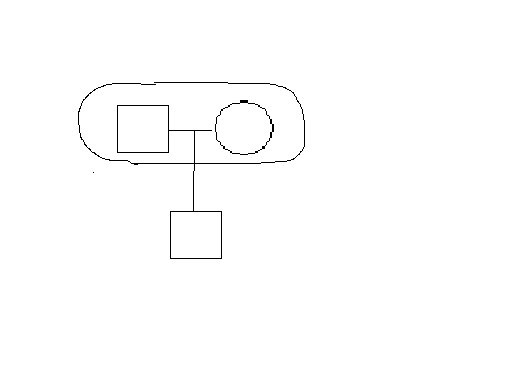
When there are CHILDREN, parents have to establish a pecking order of intimacies. The parents are intimate with one another, the children are intimate with one another.
 My father used to say that was why if one of us did something wrong, all of us got punished. He thought it was great that us kids bonded by being angry at him. (The picture says it all about my attitude towards perfectionism)
Dad had the right idea, perhaps, but the execution left something to be desired. (No, we weren't abused). Being angry at your parents isn't the only way to bond. That plan ensures pseudo-intimacy, intimacy at the expense of someone else.
If an enmeshed child gets married, his mother often has the key to his new home, and may think nothing of dropping by at the most inconvenient times.
Family therapists had (have) their work cut out for them in cases like these, but of course there are so many degrees of enmeshment, so many levels of guilt, that there is a slippery slope to generalizing about what is pathological.
Oh, and Jews have NO corner on the market.
We can talk about this another time. It's really about separating from children, allowing them to separate from you, pushing them to live their own lives, to build SELF
To me? The ANTI ENMESHMENT variable has always been, when they were young, the don't look back; You Can Do It style of parenting. Encourage confidence and experience, exploration.
Push them out, make them learn, insist that they don't look back, except to say, THANKS, MOM and DAD, you really got it right. I CAN do it.
Oh, and if anyone's listening? That was for when you were young. You guys can still live right next door. It's okay. I won't want the key.
Copyright 2006, TherapyDoc
Friday, October 13, 2006
Oprah, Child Abuse, and Secondary Trauma
Secondary trauma is the trauma that docs (and nurses and other health care professionals) experience when they LISTEN to a really violent, yucky story.
We can't zone out, really, ala Dr. K (see that anecdote).
Unless we're able to separate ourselves psychologically from our patients, we can take home some pretty nasty stories.
It could be a very ugly thing, being a professional.
Secondary trauma can happen to you, too. I had a patient who watched Oprah's series on child abuse over the summer. Apparently Oprah interviewed survivors (I hope they were survivors) of all kinds of horrible, horrible childhood abuse, physical, verbal, sexual, emotional, you name it.
You'll notice I haven't told you over ANY really horrible stories on this blog (well, one, Gone Postal but that was to get you to sympathize with therapydocs, not be mad at us all the time). Why would I? You need this? It's bad enough one of us has to know these things.
Anyway, now you, too, can watch Oprah and get traumatized.
My client, by the way, found her interviews insensitive and traumatizing for the interviewee, the person being interviewed. She said, Last I checked, Oprah doesn't have a degree in psychology, or social work or counseling?
I don't know, but most journalists don’t have social science degrees, probably, and they do go in for the jugular on a story.
Twenty years ago I treated a journalist who said there was no "being nice". You try, but it's the story people want. FYO, every journalist I've ever met has been really nice. Of course, I idealize and love all my clients as a rule, so maybe I'm not being objective.
But journalists have to be sensitive, don't they? TLike police people, they have to suffer from at least a little secondary trauma, if not a lot. And the little I've known of Oprah, she seems to be sensitive, too, why else would she air those shows on child abuse, or go to Auschwitz with Elie Wiesel (yeah, I watched that one).
As a rule, however, I don't watch her, and don't have to because my clients are very ready to tell me the latest thing they LEARNED on her show.
Anyway, why would I watch shows like this, when I can get reruns of Lassie on cable? Come on!
So how is it that those of us survive secondary trauma? How do we separate ourselves from the people and the stories we hear?
How should you get over what you saw on Oprah?
First of all, if you're a sensitive person, you have no right watching scary stuff to begin with. Don't expose your brain to garbage that will be keeping you up at night. My feeling is that if it does keep you up that you're not sick, or weird, or psychotic, or in need of drugs. You're simply sensitive to violence, and maybe that's a GOOD thing.
Once the damage is done, (sensitivity's only good to a degree, I guess) you have to realize: a) you aren't sick, or weird, or psychotic, b) you weren't victimized like the people you saw on television/street/t.v., and c) you weren't victimized like the people you saw on television/street/t.v..
And of course, the chances are next to nil that you will be. You and what you see on television are so NOT the same. You're safe at home, you're okay. They're not. The world can be a terrible place to live. People can be egregiously mean and horrid to one another.
But MOST people aren't. Most people are really nice, kind, good-hearted, and even share their newspaper, well, they'll leave the newspaper on the seat for you when they get off the bus.
So what do we do if we ourselves HAVE been traumatized, if we're survivors of childhood abuse of some kind?
That's a long, loaded question, and it's a little too depressing to get into right now. I wanted this to be a HOPEFUL post.
But I'll give you one story.
Had a patient who was married to a real S.O.B. (her description, not mine). He never hit her, but really was psychotic and delighted in tormenting her emotionally.
(They could make a t.v. show out of that marriage. People would LOVE it.)
Anyway, when he passed away, violently, but not at her hands, she suffered guilt for the happiness she felt, but mostly she felt trauma from her memories for many years afterward.
After much listening, and many visits, (she gets to leave me the junk, see, so she can go home and feel better) I said, You have to reconstruct them. You have to change your memories so that your brain remembers them differently. CHANGE THE BLANKING STORY. MAKE A BETTER ENDING.
I thought a trap door would work, you know? Like she could press a button and he'd fall into one of those pits with snakes you see in movies like Raiders of the Lost Ark.
She liked seeing his head being flushed down the toilet. That worked for her.
Everyone's a comedian. See why I love this job? But it worked. It'll only work if you really replace that pathway in the brain, keep the intervention going over and over again to rewire your connections. But it does work.
Reconstructing memories, by the way, is a cognitive intervention.
Pleasant dreams.
Copyright 2006, TherapyDoc
We can't zone out, really, ala Dr. K (see that anecdote).
Unless we're able to separate ourselves psychologically from our patients, we can take home some pretty nasty stories.
It could be a very ugly thing, being a professional.
Secondary trauma can happen to you, too. I had a patient who watched Oprah's series on child abuse over the summer. Apparently Oprah interviewed survivors (I hope they were survivors) of all kinds of horrible, horrible childhood abuse, physical, verbal, sexual, emotional, you name it.
You'll notice I haven't told you over ANY really horrible stories on this blog (well, one, Gone Postal but that was to get you to sympathize with therapydocs, not be mad at us all the time). Why would I? You need this? It's bad enough one of us has to know these things.
Anyway, now you, too, can watch Oprah and get traumatized.
My client, by the way, found her interviews insensitive and traumatizing for the interviewee, the person being interviewed. She said, Last I checked, Oprah doesn't have a degree in psychology, or social work or counseling?
I don't know, but most journalists don’t have social science degrees, probably, and they do go in for the jugular on a story.
Twenty years ago I treated a journalist who said there was no "being nice". You try, but it's the story people want. FYO, every journalist I've ever met has been really nice. Of course, I idealize and love all my clients as a rule, so maybe I'm not being objective.
But journalists have to be sensitive, don't they? TLike police people, they have to suffer from at least a little secondary trauma, if not a lot. And the little I've known of Oprah, she seems to be sensitive, too, why else would she air those shows on child abuse, or go to Auschwitz with Elie Wiesel (yeah, I watched that one).
As a rule, however, I don't watch her, and don't have to because my clients are very ready to tell me the latest thing they LEARNED on her show.
Anyway, why would I watch shows like this, when I can get reruns of Lassie on cable? Come on!
So how is it that those of us survive secondary trauma? How do we separate ourselves from the people and the stories we hear?
How should you get over what you saw on Oprah?
First of all, if you're a sensitive person, you have no right watching scary stuff to begin with. Don't expose your brain to garbage that will be keeping you up at night. My feeling is that if it does keep you up that you're not sick, or weird, or psychotic, or in need of drugs. You're simply sensitive to violence, and maybe that's a GOOD thing.
Once the damage is done, (sensitivity's only good to a degree, I guess) you have to realize: a) you aren't sick, or weird, or psychotic, b) you weren't victimized like the people you saw on television/street/t.v., and c) you weren't victimized like the people you saw on television/street/t.v..
And of course, the chances are next to nil that you will be. You and what you see on television are so NOT the same. You're safe at home, you're okay. They're not. The world can be a terrible place to live. People can be egregiously mean and horrid to one another.
But MOST people aren't. Most people are really nice, kind, good-hearted, and even share their newspaper, well, they'll leave the newspaper on the seat for you when they get off the bus.
So what do we do if we ourselves HAVE been traumatized, if we're survivors of childhood abuse of some kind?
That's a long, loaded question, and it's a little too depressing to get into right now. I wanted this to be a HOPEFUL post.
But I'll give you one story.
Had a patient who was married to a real S.O.B. (her description, not mine). He never hit her, but really was psychotic and delighted in tormenting her emotionally.
(They could make a t.v. show out of that marriage. People would LOVE it.)
Anyway, when he passed away, violently, but not at her hands, she suffered guilt for the happiness she felt, but mostly she felt trauma from her memories for many years afterward.
After much listening, and many visits, (she gets to leave me the junk, see, so she can go home and feel better) I said, You have to reconstruct them. You have to change your memories so that your brain remembers them differently. CHANGE THE BLANKING STORY. MAKE A BETTER ENDING.
I thought a trap door would work, you know? Like she could press a button and he'd fall into one of those pits with snakes you see in movies like Raiders of the Lost Ark.
She liked seeing his head being flushed down the toilet. That worked for her.
Everyone's a comedian. See why I love this job? But it worked. It'll only work if you really replace that pathway in the brain, keep the intervention going over and over again to rewire your connections. But it does work.
Reconstructing memories, by the way, is a cognitive intervention.
Pleasant dreams.
Copyright 2006, TherapyDoc
Thursday, October 12, 2006
Depression Varies
I wrote the last post to give you a little perspective on depression. Most of us are depressed at some point during the day, and we’re quite conscious of it. We KNOW we’re depressed.
Friend One: How are you?
Friend Two: Depressed, you?
Friend One: SO depressed.
Friend Two: Yeah.
But you should know, after reading the last post, that you might not actually be suffering from depression. That post was a welcome to my world, post. It's the kind of depression I hear about all the time, the reason you don't want my job, right?).
What I wrote about was clinical depression, that it really has to be treated with medication and psychotherapy. The only thing that can kill you about depression is you. So we take it pretty seriously in the biz.
The DAILY feeling of depression can sometimes be diagnosable as well. (Okay, everybody happy? Maybe you are depressed).
In any case, another real McCoy diagnosis, Dysthymic Disorder, is a state of being depressed MOST days of the week, most of the time. You can be dysthymic and still have no trouble getting out of bed. Your thoughts don’t have to be that dark. But you're sick.
Most of us, however, are stuck with feeling low, probably a function of blood sugar (that’s why your mom said, EAT), fatigue, lousy luck, social problems, a difficult work situation, or, or course, no work situation. LOTS of reasons.
If we watch our emotions we can actually track how fast they change. But if you find yourself tracking your emotions you might actually be depressed. Maybe you don’t have a major affective disorder, but you can still benefit from a little psychotherapy, or better still, some relationship therapy if you think you need it.
There are many different actual clinical diagnoses of depression, but being turned inward, being hypersensitive to your body and emotions, is symptomatic of all of them
If your physician tells you that you’re somaticizing, then he/she is referring to something a little different. Your body can take on symptoms of real illnesses when you’re depressed. Your medical doc can treat the illness, but you really need to talk about your problems to get to the source.
Sometimes you get sick when you’re depressed because you’re not sleeping well and your resistance is low. Case in point for naps (or meds).
At the end of the day? It doesn’t matter what the clinical diagnosis. Follow your symptoms, and if you feel you need to talk to someone about them, do it.
No point in being macho about depression when we KNOW it’s the one illness that we can cure. (see previous post, Depression Feeds on Itself)
Copyright 2006, TherapyDoc
Friend One: How are you?
Friend Two: Depressed, you?
Friend One: SO depressed.
Friend Two: Yeah.
But you should know, after reading the last post, that you might not actually be suffering from depression. That post was a welcome to my world, post. It's the kind of depression I hear about all the time, the reason you don't want my job, right?).
What I wrote about was clinical depression, that it really has to be treated with medication and psychotherapy. The only thing that can kill you about depression is you. So we take it pretty seriously in the biz.
The DAILY feeling of depression can sometimes be diagnosable as well. (Okay, everybody happy? Maybe you are depressed).
In any case, another real McCoy diagnosis, Dysthymic Disorder, is a state of being depressed MOST days of the week, most of the time. You can be dysthymic and still have no trouble getting out of bed. Your thoughts don’t have to be that dark. But you're sick.
Most of us, however, are stuck with feeling low, probably a function of blood sugar (that’s why your mom said, EAT), fatigue, lousy luck, social problems, a difficult work situation, or, or course, no work situation. LOTS of reasons.
If we watch our emotions we can actually track how fast they change. But if you find yourself tracking your emotions you might actually be depressed. Maybe you don’t have a major affective disorder, but you can still benefit from a little psychotherapy, or better still, some relationship therapy if you think you need it.
There are many different actual clinical diagnoses of depression, but being turned inward, being hypersensitive to your body and emotions, is symptomatic of all of them
If your physician tells you that you’re somaticizing, then he/she is referring to something a little different. Your body can take on symptoms of real illnesses when you’re depressed. Your medical doc can treat the illness, but you really need to talk about your problems to get to the source.
Sometimes you get sick when you’re depressed because you’re not sleeping well and your resistance is low. Case in point for naps (or meds).
At the end of the day? It doesn’t matter what the clinical diagnosis. Follow your symptoms, and if you feel you need to talk to someone about them, do it.
No point in being macho about depression when we KNOW it’s the one illness that we can cure. (see previous post, Depression Feeds on Itself)
Copyright 2006, TherapyDoc
Wednesday, October 11, 2006
Depression Feeds on Itself
Something about this time of year, mid-October, first harbingers of autumn, first nip in the air. People are coming in depressed.
Sure, it's random. I know. But if there were a theme for the week so far it would surely be, "I'm so blanking depressed, Doc. Can't seem to shake it."
When my daughter-in-law, a future therapydoc, was in town over the weekend, we talked a lot about shaking it up. I said, "Shake it up has to be our theme song," theme something, can't remember exactly what I said.
If you watch the cable cooking show EMERYL you know his motto is Kick it Up, meaning add a lot of garlic or Worchester sauce. So shake it up is on that order.
What AM I talking about?
First the quick and dirty on depression. Forget genetics for a second, forget drugs, forget trauma. Let's just run through what happens when a person is depressed.
The mind shuts down, can't think, and the body crashes, too. The neurons of the brain have locked up endorphins (feel good neurotransmitters) in brain cell walls so that there's no zipping around up there.
Endorphin lock-down in the brain is the enemy, of course. Anti-depressants kick locked up serotonin out of the walls of the neurons. When serotonin is zipping around again, people feel better.
So that's one way to shake it up. Use meds. I highly recommend this, but don't leave out the psychotherapy. The psychotherapy can be behavioral (like you'll get in this post). Talk therapy is actually behavioral, too. It's cognitive, thoughtful. But talking is a behavior. So talk therapy IS the original behavioral therapy.
Let's look at what depressed people actually go through.
When you're depressed you feel like your brain is running too slow. Everything is less intelligible, everything is hard. A person feels physically fatigued, worn out, lethargic, heavy. Real depression makes it hard to get out of bed, hard to get up in the morning, hard to do the simplest of tasks.
People with well-developed super-egos, who have many "shoulds" that rule their lives, think they're being lazy when they're depressed. They get angry at themselves for being unable to fold the laundry, take in the mail, change the cat litter.
Mundane tasks seem so hard, but do-ers who get depressed know that someone has to do them, only they just don't care. They're not themselves. They know it and it makes them MORE depressed.
People who don't mind underfunctioning are still going to feel terrible when they're clinically depressed. Depression also brings on tears and the feeling that there is indeed a cloud directly OVER one's head.
Clinical depression, you probably know, means that your appetites are virtually gone: you don't feel like eating, you can't sleep, and sex is the last thing on your mind.
Then there's the problem of communicating. If you're depressed, when other people talk to you, you tend to space out, can't follow, lose track, can't concentrate. You forget everything, even writing things down is a chore. You forget to make lists, forget to write things down, can't find a pen.
This cognitive dysfunction is humiliating and depressing. Again, the very symptoms of depression can actually make a person more depressed.
(Novice docs who try to do cognitive therapy, as in, challenging negative thoughts, before good cognition is possible only frustrate their patients. Analyzing one's negative thoughts really can wait until a person feels just a little better. Next post maybe.)
And of course, depressed people stay at home (no energy); they don't go to parties. They don't visit, gossip. In fact, they avoid people, too mentally fatigued to want to put forth the effort of socializing. Even the easiest social interaction, say going to a movie with someone, can feel like drudgery, work. Then there's that problem with concentration.
Basically? The senses are dulled, the mind drawn inward, attention is only upon the self and thoughts tend to be negative, the negative thoughts paralyzing creativity.
There's no thought of garlic. None.
How DO we slip in the garlic?
It takes work.
If you were in a hospital for depression, the staff would have you out of bed and hitting the showers at 6:30 a.m. Showers are stimulating. You'd be in group therapy by 7:00 and have breakfast at 8:00. By 9:00 you'd be seeing a doc, by 10:00 shooting baskets or playing ping pong.
The day would be busy. The hospital program essentially works to get that brain/body functioning again. The stimulation isn't only talk therapy, it's also physical, and psycho- pharmacological, of course. They use meds in hospitals, and work to get them right.
If you're treated as an out-patient, seeing someone like me, then your doc probably won't make you get up at 6:30, but you might have to agree to try to force your way out of bed at some point.
The idea is that you don't want to sleep your life away. Meds work here, too.
But once you're on meds you might sleep too long, and until you take them you may not sleep well, if at all. Oh, and did I mention that everyone's different?
In some cases sleeping the entire depressive episode IS necessary and has to happen. Especially in bi-polar disorder, where the highs are very high and the lows very low, there may be no alternative to sleep than to sleep.
Which is fine. But it's worth testing it out, trying to see if sensory stimulation won't help waken a sleeping brain. It often does.
What's sensory stimulation? It's something that the brain can use to kick those endorphins out of the cell walls by tickling perceptors. Imagination can do it, too, believe it or not, thinking new, more exciting thoughts. Good psychotherapy functions like that. Events can do it, like winning the lottery. The brain likes things new.
But assuming you won't win the lottery, I'm actually suggesting that if you haven't bought yourself anything new to wear for a year, this might be the time to pop for a couple of affordable new things. New clothes FEEL good.
New things don't have to be material, however. They don't have to be things you buy.
The brain likes any stimulation, anything new. Like the smell of a rose, or baby oil on the skin. Fresh baked bread. A manicure.
I push people to work the tasks of the five senses: seeing, hearing, smelling, tasting, and feeling. These are your gateways to worldly pleasures. We perceive the world around us with our eyes, ears, nose, mouth, and skin.
WE HAVE TO STIMULATE THE SENSES TO WAKE UP A SLEEPING, DEPRESSED BRAIN.
I'll tell my patients, even those on disability who can't work,
You had blank well better get outside today and look up at the sky. I want to know the colors you see. I want to know what birds are out there. I want to know how it feels to let the raindrops wet your skin. I want you to walk around in the rain, hear the crackle of leaves beneath your feet.
If you only walk to the sidewalk, that's fine. Do it ten times a day.
Dr. Domeena Renshaw, one of my mentors, said in 1981 before we even had half the great drugs we have today: If I have to have a single terrible illness, MAKE IT DEPRESSION. I KNOW I'LL GET WELL. It might take a year, but it'll pass.
There's such a thing as trying to speed things along, though. Not always, not in EVERY case, but in most, there's the pro-active piece of jogging depression.
If you don't shake it up, depression really might feed on itself and get worse. You might go from staying home, to losing weight, to sleeplessness, hopelessness, and helplessness. The perfectly fabulous person you are might feel like a loser and think life not worthwhile.
You do have to work at getting better.
The alternative's unacceptable peeps. Not on my watch. Shake it up.
Copyright 2006, TherapyDoc
Sure, it's random. I know. But if there were a theme for the week so far it would surely be, "I'm so blanking depressed, Doc. Can't seem to shake it."
When my daughter-in-law, a future therapydoc, was in town over the weekend, we talked a lot about shaking it up. I said, "Shake it up has to be our theme song," theme something, can't remember exactly what I said.
If you watch the cable cooking show EMERYL you know his motto is Kick it Up, meaning add a lot of garlic or Worchester sauce. So shake it up is on that order.
What AM I talking about?
First the quick and dirty on depression. Forget genetics for a second, forget drugs, forget trauma. Let's just run through what happens when a person is depressed.
The mind shuts down, can't think, and the body crashes, too. The neurons of the brain have locked up endorphins (feel good neurotransmitters) in brain cell walls so that there's no zipping around up there.
Endorphin lock-down in the brain is the enemy, of course. Anti-depressants kick locked up serotonin out of the walls of the neurons. When serotonin is zipping around again, people feel better.
So that's one way to shake it up. Use meds. I highly recommend this, but don't leave out the psychotherapy. The psychotherapy can be behavioral (like you'll get in this post). Talk therapy is actually behavioral, too. It's cognitive, thoughtful. But talking is a behavior. So talk therapy IS the original behavioral therapy.
Let's look at what depressed people actually go through.
When you're depressed you feel like your brain is running too slow. Everything is less intelligible, everything is hard. A person feels physically fatigued, worn out, lethargic, heavy. Real depression makes it hard to get out of bed, hard to get up in the morning, hard to do the simplest of tasks.
People with well-developed super-egos, who have many "shoulds" that rule their lives, think they're being lazy when they're depressed. They get angry at themselves for being unable to fold the laundry, take in the mail, change the cat litter.
Mundane tasks seem so hard, but do-ers who get depressed know that someone has to do them, only they just don't care. They're not themselves. They know it and it makes them MORE depressed.
People who don't mind underfunctioning are still going to feel terrible when they're clinically depressed. Depression also brings on tears and the feeling that there is indeed a cloud directly OVER one's head.
Clinical depression, you probably know, means that your appetites are virtually gone: you don't feel like eating, you can't sleep, and sex is the last thing on your mind.
Then there's the problem of communicating. If you're depressed, when other people talk to you, you tend to space out, can't follow, lose track, can't concentrate. You forget everything, even writing things down is a chore. You forget to make lists, forget to write things down, can't find a pen.
This cognitive dysfunction is humiliating and depressing. Again, the very symptoms of depression can actually make a person more depressed.
(Novice docs who try to do cognitive therapy, as in, challenging negative thoughts, before good cognition is possible only frustrate their patients. Analyzing one's negative thoughts really can wait until a person feels just a little better. Next post maybe.)
And of course, depressed people stay at home (no energy); they don't go to parties. They don't visit, gossip. In fact, they avoid people, too mentally fatigued to want to put forth the effort of socializing. Even the easiest social interaction, say going to a movie with someone, can feel like drudgery, work. Then there's that problem with concentration.
Basically? The senses are dulled, the mind drawn inward, attention is only upon the self and thoughts tend to be negative, the negative thoughts paralyzing creativity.
There's no thought of garlic. None.
How DO we slip in the garlic?
It takes work.
If you were in a hospital for depression, the staff would have you out of bed and hitting the showers at 6:30 a.m. Showers are stimulating. You'd be in group therapy by 7:00 and have breakfast at 8:00. By 9:00 you'd be seeing a doc, by 10:00 shooting baskets or playing ping pong.
The day would be busy. The hospital program essentially works to get that brain/body functioning again. The stimulation isn't only talk therapy, it's also physical, and psycho- pharmacological, of course. They use meds in hospitals, and work to get them right.
If you're treated as an out-patient, seeing someone like me, then your doc probably won't make you get up at 6:30, but you might have to agree to try to force your way out of bed at some point.
The idea is that you don't want to sleep your life away. Meds work here, too.
But once you're on meds you might sleep too long, and until you take them you may not sleep well, if at all. Oh, and did I mention that everyone's different?
In some cases sleeping the entire depressive episode IS necessary and has to happen. Especially in bi-polar disorder, where the highs are very high and the lows very low, there may be no alternative to sleep than to sleep.
Which is fine. But it's worth testing it out, trying to see if sensory stimulation won't help waken a sleeping brain. It often does.
What's sensory stimulation? It's something that the brain can use to kick those endorphins out of the cell walls by tickling perceptors. Imagination can do it, too, believe it or not, thinking new, more exciting thoughts. Good psychotherapy functions like that. Events can do it, like winning the lottery. The brain likes things new.
But assuming you won't win the lottery, I'm actually suggesting that if you haven't bought yourself anything new to wear for a year, this might be the time to pop for a couple of affordable new things. New clothes FEEL good.
New things don't have to be material, however. They don't have to be things you buy.
The brain likes any stimulation, anything new. Like the smell of a rose, or baby oil on the skin. Fresh baked bread. A manicure.
I push people to work the tasks of the five senses: seeing, hearing, smelling, tasting, and feeling. These are your gateways to worldly pleasures. We perceive the world around us with our eyes, ears, nose, mouth, and skin.
WE HAVE TO STIMULATE THE SENSES TO WAKE UP A SLEEPING, DEPRESSED BRAIN.
I'll tell my patients, even those on disability who can't work,
You had blank well better get outside today and look up at the sky. I want to know the colors you see. I want to know what birds are out there. I want to know how it feels to let the raindrops wet your skin. I want you to walk around in the rain, hear the crackle of leaves beneath your feet.
If you only walk to the sidewalk, that's fine. Do it ten times a day.
Dr. Domeena Renshaw, one of my mentors, said in 1981 before we even had half the great drugs we have today: If I have to have a single terrible illness, MAKE IT DEPRESSION. I KNOW I'LL GET WELL. It might take a year, but it'll pass.
There's such a thing as trying to speed things along, though. Not always, not in EVERY case, but in most, there's the pro-active piece of jogging depression.
If you don't shake it up, depression really might feed on itself and get worse. You might go from staying home, to losing weight, to sleeplessness, hopelessness, and helplessness. The perfectly fabulous person you are might feel like a loser and think life not worthwhile.
You do have to work at getting better.
The alternative's unacceptable peeps. Not on my watch. Shake it up.
Copyright 2006, TherapyDoc
Tuesday, October 10, 2006
Using Bad Health to Get What You Want
To get what you think you need.
This is a wonderful example of how some people use their resources (other people) to the max. Those who are emotionally impoverished or just low on their confidence think they have little to offer to others than their poor health. It can become the essence of every relationship.
It's easy to manipulate nice people to shell out attention and time, especially when health is poor. Manipulators who lack poor health to draw attention will even fabricate it.
This can get pretty ugly if the people we're talking about are relatives.
Let's start with elderly parents.
Those who squeezed everything out of their children throughout their lifetimes by exaggerating everyday aches and pains, undoubtedly become worse when they're older and their health really does deteriorate.
Children who have long since stopped attending to them might totally disappear when they really are needed. They refused to be pawns of what is called secondary gain, in the literature.
Secondary gain is getting psychological attention for a medical condition. It's certainly not always this sinister.
Those of us from healthy families WANT to care for our aging parents. We WANT to see them comfortable and well. We're grateful for the opportunity to help them when they need us, young or old, but especially when they're older.
And if they're emotionally healthy? Said parents can drive us crazy with their refusal to accept help.
But the emotionally healthy elderly not the population we're talking about today. We're talking about people who regardless of their age, have always wanted care-taking, who perceive that they have little else to use to capture love and attention other than ill health, one dynamic in this system.
Another dynamic is that there is a family culture of giving and getting attention ONLY for physical misery. Be miserable and you're golden.
Crazy lesson, I know, but there are these families. And the order of the relationship is absolutely irrelevant. Could be a child nagging for attention. Could be a parent nagging. Just keep the nagging going, man. That's the ticket.
It's like when my twins were babies. SOMEBODY had to be crying at all times. One of them had to be crying. But they were babies, under a year old, working together to be sure they weren't left unattended. I'd call that a Darwinian thing, teleological even.
What I'm talking about in this post is different. We might even think of it as co-dependent behavior (later see my posts on this, one, two, three, and four.) One needs the other to be dependent so the other obliges.
In the medical profession, docs and nurses see this perversity every day. Conceivably, in the patient's head, it's the docs and nurses who need to be needed. The patient is simply filling in the need.
Appointments are there to meet the needs of medical professionals, to fill their time, not to actually help sick people.
I said conceivably. Doctors and nurses often complain to me about people who are NOT sick who are chewing up the precious time they should be spending on people who ARE sick.
But let's talk briefly about how to change the dynamic in a family that fosters this weird dependency.
One intervention can be done cold turkey route if there's no risk of death or mismanagement of an illness. So if someone is manufacturing symptoms you really can do this, stop attending to them, get off the phone by hanging up on them. Abandon them, yes.
Of course that individual will not stop persisting that you help, but you'll feel better if you don't. This ultimately can end up as a Munchausen's disorder in which people MAKE themselves sick for attention to SHOW YOU. Those people WANT surgery and will find a surgeon to comply. Then you're the guilty one, right?
But let's say you catch it early.
A professional dealing with such a patient will try to refer to psychiatry. The patient will refuse, or go, perhaps, seeking emotional patting and validation of the illness.
A good therapist will provide that, engage the client, pat a lot, then get to work on finding this person, exacting the unique identity that is so layered and bound in that body/brain that even she (it's usually a she, but can be a he) has no idea who's in there.
A family therapist like me will see if it's at all possible to get the patient to recognize the actual needs of the significant others in the relationships.
Like if it's a 60 year old woman being sick to get the attention of an 80 year old parent, I'd go right for, OMG, your mom could die at any moment. We have to DO something to make her more comfortable.
This may or may not work. Whenever that happens, however, whenever I have a middle-aged person who is exploiting an elderly person and feels just the slightest bit guilty for not care-taking that person, I pile on more guilt.
Idiot, I say. You're supposed to take care of THEM at some point. When were you going to figure that out? THIS IS THAT POINT.
But what if the 60 year old really IS sick and is chalishing (hard "ch" a Yiddish word meaning relishing, sounds better, no?) the opportunity for attention from mom?
It's probably too difficult and too late to put her in charge of her mother. Her mother is perhaps captive now, has lost the battle and is lost in sadness. How does life get to this place where an elderly woman must care-take a younger one, one who INTENTIONALLY let her health go to extract this attention?
Sigh.
It being inappropriate or even impossible for an octogenarian to run back and forth to care-take a middle-aged person, I'd extricate her from that role if at all possible, find alternative resources, council the elderly person to let others do the job.
When the system is stuck like this, however, it does feel like a hopeless/helpless (freaking depressing) case for everyone but the patient who is chalishing.
The psychotherapy that I would do with the chalisher is still be about finding out who she is, was, and wants to do with the rest of her life.
I don't fold the cards, frankly, until the last hand is played. But these are the cases that can take it out of you.
Enough for today, I'm tired. I think I'll call my mom and ask her to bring me a cup of coffee.
Copyright 2006, TherapyDoc
This is a wonderful example of how some people use their resources (other people) to the max. Those who are emotionally impoverished or just low on their confidence think they have little to offer to others than their poor health. It can become the essence of every relationship.
It's easy to manipulate nice people to shell out attention and time, especially when health is poor. Manipulators who lack poor health to draw attention will even fabricate it.
This can get pretty ugly if the people we're talking about are relatives.
Let's start with elderly parents.
Those who squeezed everything out of their children throughout their lifetimes by exaggerating everyday aches and pains, undoubtedly become worse when they're older and their health really does deteriorate.
Children who have long since stopped attending to them might totally disappear when they really are needed. They refused to be pawns of what is called secondary gain, in the literature.
Secondary gain is getting psychological attention for a medical condition. It's certainly not always this sinister.
Those of us from healthy families WANT to care for our aging parents. We WANT to see them comfortable and well. We're grateful for the opportunity to help them when they need us, young or old, but especially when they're older.
And if they're emotionally healthy? Said parents can drive us crazy with their refusal to accept help.
But the emotionally healthy elderly not the population we're talking about today. We're talking about people who regardless of their age, have always wanted care-taking, who perceive that they have little else to use to capture love and attention other than ill health, one dynamic in this system.
Another dynamic is that there is a family culture of giving and getting attention ONLY for physical misery. Be miserable and you're golden.
Crazy lesson, I know, but there are these families. And the order of the relationship is absolutely irrelevant. Could be a child nagging for attention. Could be a parent nagging. Just keep the nagging going, man. That's the ticket.
It's like when my twins were babies. SOMEBODY had to be crying at all times. One of them had to be crying. But they were babies, under a year old, working together to be sure they weren't left unattended. I'd call that a Darwinian thing, teleological even.
What I'm talking about in this post is different. We might even think of it as co-dependent behavior (later see my posts on this, one, two, three, and four.) One needs the other to be dependent so the other obliges.
In the medical profession, docs and nurses see this perversity every day. Conceivably, in the patient's head, it's the docs and nurses who need to be needed. The patient is simply filling in the need.
Appointments are there to meet the needs of medical professionals, to fill their time, not to actually help sick people.
I said conceivably. Doctors and nurses often complain to me about people who are NOT sick who are chewing up the precious time they should be spending on people who ARE sick.
But let's talk briefly about how to change the dynamic in a family that fosters this weird dependency.
One intervention can be done cold turkey route if there's no risk of death or mismanagement of an illness. So if someone is manufacturing symptoms you really can do this, stop attending to them, get off the phone by hanging up on them. Abandon them, yes.
Of course that individual will not stop persisting that you help, but you'll feel better if you don't. This ultimately can end up as a Munchausen's disorder in which people MAKE themselves sick for attention to SHOW YOU. Those people WANT surgery and will find a surgeon to comply. Then you're the guilty one, right?
But let's say you catch it early.
A professional dealing with such a patient will try to refer to psychiatry. The patient will refuse, or go, perhaps, seeking emotional patting and validation of the illness.
A good therapist will provide that, engage the client, pat a lot, then get to work on finding this person, exacting the unique identity that is so layered and bound in that body/brain that even she (it's usually a she, but can be a he) has no idea who's in there.
A family therapist like me will see if it's at all possible to get the patient to recognize the actual needs of the significant others in the relationships.
Like if it's a 60 year old woman being sick to get the attention of an 80 year old parent, I'd go right for, OMG, your mom could die at any moment. We have to DO something to make her more comfortable.
This may or may not work. Whenever that happens, however, whenever I have a middle-aged person who is exploiting an elderly person and feels just the slightest bit guilty for not care-taking that person, I pile on more guilt.
Idiot, I say. You're supposed to take care of THEM at some point. When were you going to figure that out? THIS IS THAT POINT.
But what if the 60 year old really IS sick and is chalishing (hard "ch" a Yiddish word meaning relishing, sounds better, no?) the opportunity for attention from mom?
It's probably too difficult and too late to put her in charge of her mother. Her mother is perhaps captive now, has lost the battle and is lost in sadness. How does life get to this place where an elderly woman must care-take a younger one, one who INTENTIONALLY let her health go to extract this attention?
Sigh.
It being inappropriate or even impossible for an octogenarian to run back and forth to care-take a middle-aged person, I'd extricate her from that role if at all possible, find alternative resources, council the elderly person to let others do the job.
When the system is stuck like this, however, it does feel like a hopeless/helpless (freaking depressing) case for everyone but the patient who is chalishing.
The psychotherapy that I would do with the chalisher is still be about finding out who she is, was, and wants to do with the rest of her life.
I don't fold the cards, frankly, until the last hand is played. But these are the cases that can take it out of you.
Enough for today, I'm tired. I think I'll call my mom and ask her to bring me a cup of coffee.
Copyright 2006, TherapyDoc
Monday, October 09, 2006
Mark Foley and Coercion
Republican representative Mark Foley resigned last week following Washington Post allegations that he solicited sex from under-aged Congressional pages in their dormitory and contacted others using sexually explicit language over the Internet.
The Congressman's appearance in a residence hall after 10 p.m. was inappropriate, obviously, as were the e-mail solicitations. Was it illegal? And should that even matter?
The answer regarding the illegality is fuzzy. Geographical boundaries may limit the jurisdiction of state law. But it matters. What he did matters.
Take a look at the psychological ramifications, whatever the law:
Psychologically, what have we here?
IF it turns out that indeed this happened, that Mark Foley did solicit sex from at least one 16 year old, then he is guilty of using his position of authority, not to mention chronological age, to persuade someone younger and more vulnerable to have sex with him, some form of sex.
Will that young person remember it as a trauma at some point, perhaps even in the near future and feel shame? VERY possible.
Will that youth be angry at Mr. Foley? VERY likely.
Will the youth blame himself nevertheless? YES. VERY likely.
Even if the child can externalize blame to the predator, his own self-blame and doubt will be very difficult to erase. This event will constitute a snapshot memory.
Those of you who have been reading me up until now know what that means. He'll be ninety, but the "child" won't have forgotten Mark Foley and what they did/said to one another. Words like "dirty," "unworthy," and "bad" will become self-attributes, without therapy, that is.
Even if the child had agreed to sex, wanted sex, consented willingly, and was not under the influence of drugs and alcohol, if he regrets it later, he's in trouble psychologically.
Because there's this effect upon self-esteem, see. It goes down.
And low self-esteem makes a person more vulnerable to alcoholism, drugs, and other self-destructive self-medicating behaviors, even cutting. These changes have the potential to influence everything important in the future: education, vocation, other sexual relationships, even marriage, having children, and parenting.
Should a Congressman, or a teacher, or any other person in a position of authority be censured and forced to make formal amends to a victim of such an act of emotional, if not sexual violence? If it morphs into an emotionally violent trauma, then defeated self-esteem is an inevitable consequence.
Uh, YES. Mark Foley, and others like him, should be tried and should obliged to pay to make amends, which might include the cost of therapy for the victim, even the cost of a college education. Damages may depend upon how far the projected psychological set back of the child, dependent upon a thousand other variables.
When you mess with children, you don't know what you're really messing with. They're humans, and they have histories. It isn't a good idea, and that will be the ultimate lesson of this scandal.
For your edification, here are the definitions that this doc used while investigating campus rape at Xavier University in Ohio in an on-going three year longitudinal project. This school has an official zero tolerance policy toward sexual, racial, and minority sexual orientation harassment of students.
Xavier now has an excellent rape prevention/treatment program that networks with other local advocacy programs. Coercion, the act we're talking about, is the last bullet on the list.
So it's coercion, peeps. Simple, but not so simple sexual coercion. I, for one, hope he pays.
Copyright 2006, TherapyDoc
The Congressman's appearance in a residence hall after 10 p.m. was inappropriate, obviously, as were the e-mail solicitations. Was it illegal? And should that even matter?
The answer regarding the illegality is fuzzy. Geographical boundaries may limit the jurisdiction of state law. But it matters. What he did matters.
Take a look at the psychological ramifications, whatever the law:
Psychologically, what have we here?
IF it turns out that indeed this happened, that Mark Foley did solicit sex from at least one 16 year old, then he is guilty of using his position of authority, not to mention chronological age, to persuade someone younger and more vulnerable to have sex with him, some form of sex.
Will that young person remember it as a trauma at some point, perhaps even in the near future and feel shame? VERY possible.
Will that youth be angry at Mr. Foley? VERY likely.
Will the youth blame himself nevertheless? YES. VERY likely.
Even if the child can externalize blame to the predator, his own self-blame and doubt will be very difficult to erase. This event will constitute a snapshot memory.
Those of you who have been reading me up until now know what that means. He'll be ninety, but the "child" won't have forgotten Mark Foley and what they did/said to one another. Words like "dirty," "unworthy," and "bad" will become self-attributes, without therapy, that is.
Even if the child had agreed to sex, wanted sex, consented willingly, and was not under the influence of drugs and alcohol, if he regrets it later, he's in trouble psychologically.
Because there's this effect upon self-esteem, see. It goes down.
And low self-esteem makes a person more vulnerable to alcoholism, drugs, and other self-destructive self-medicating behaviors, even cutting. These changes have the potential to influence everything important in the future: education, vocation, other sexual relationships, even marriage, having children, and parenting.
Should a Congressman, or a teacher, or any other person in a position of authority be censured and forced to make formal amends to a victim of such an act of emotional, if not sexual violence? If it morphs into an emotionally violent trauma, then defeated self-esteem is an inevitable consequence.
Uh, YES. Mark Foley, and others like him, should be tried and should obliged to pay to make amends, which might include the cost of therapy for the victim, even the cost of a college education. Damages may depend upon how far the projected psychological set back of the child, dependent upon a thousand other variables.
When you mess with children, you don't know what you're really messing with. They're humans, and they have histories. It isn't a good idea, and that will be the ultimate lesson of this scandal.
For your edification, here are the definitions that this doc used while investigating campus rape at Xavier University in Ohio in an on-going three year longitudinal project. This school has an official zero tolerance policy toward sexual, racial, and minority sexual orientation harassment of students.
Xavier now has an excellent rape prevention/treatment program that networks with other local advocacy programs. Coercion, the act we're talking about, is the last bullet on the list.
- When someone verbally or physically taunts another because of gender, race, or minority sexual orientation (being gay, lesbian, bi-sexual, trans-sexual, inter-sexed, it is considered harassment.
- Giving in to unwanted kissing or fondling because someone continually argues or pressures is called forced sexual contact.
- When someone unsuccessfully tries to penetrate the mouth, anus, or vagina with an object or a penis——that’s called attempted rape.
- Any penetration is considered rape if it is forced, nonconsensual, or if the victim is too impaired from drugs or alcohol to make an informed decision. This is a fuzzy area for a lot of people. Understand that if a person’s goal is to have sex by getting another person so drunk or stoned that they can't give informed consent-- penetration is considered rape. Even if a woman doesn't protest very hard or says yes while under the influence, if she would definitely have said no while sober, it's considered rape by law in Ohio. That's why we're using this definition.
Again, any penetration is considered rape if it is forced, nonconsensual, or if the victim is too impaired from drugs or alcohol to make an informed decision.
- If someone in a position of authority pressures you into sexual contact or rape—either a boss or a teacher—that is considered coercion .
So it's coercion, peeps. Simple, but not so simple sexual coercion. I, for one, hope he pays.
Copyright 2006, TherapyDoc
Sunday, October 08, 2006
About Everyone Needs Therapy
SOH (on the Oh Zone) read a few of my posts and even though she likes me :), a few of her readers apparently found the original title of the blog a little silly, maybe even dumb. That's why I changed it from Everyone Needs Therapy to Lessons from a Family Therapist, peeps. I pretty much agreed.
Does EVERYONE need therapy? What's wrong with having a good friend, a shoulder to cry on, or even handling one's problems ones self?
Frankly, when I hear the advice that caring significant others shell out for free I want to die. My patients have generally suffered from the advice of friends and family, not gained. The advice is often so off the mark, I'm sorry, so wrong, so out of touch with the client, so self-serving, so biased, so blind.
Sorry, guys, but we DO learn a lot in school.
Professionals, even bad ones, are more client centered, less emotional, and have more expertize in psychopathology. They have seen several hundred of whatever "this" is. And they care, too, believe it or not.
This is only one of the reasons, I made that now legendary proclamation, "Everyone needs therapy." There are more.
The wrong people come in for therapy half the time. Literally half of the time the problem is that the person who is making the client miserable is not in touch with his or her own pathology. The identified patient would be HEALTHY were it not for the pathology of another(others).
When I wrote the original blog with the original title it was because at the time it really did seem as if everyone needed therapy. I'd be driving, someone would cut me off, flip the finger.
Or even riding my bike, people would get all upset, have to honk at me as if to say,
"Why don't you get a car, like a normal person? I have to actually slow down to make sure I don't kill you, you foo.'" :)
Then beyond the ragers, face it, there are so many sick people in the world, emotionally and physically, so much grief and suffering, that the sheer strength of the karma made me feel that were it not for professional shoulders, people would simply fold up into little balls, grieve, never re-ravel.
Of course that's not true, but that day, the day I created a URL, it felt true.
The title was always meant to be provocative. Indeed, if you think you need it, you probably do. It can't hurt. But good grief, make sure you check out your provider pretty well. And if you get bad vibes, you really don't have to come back, and if you're in anyway treated poorly, you should speak up, confront.
We don't mind the confrontation. Assertiveness communicates, essentially, "I'm alive. Hello. Yo. Let's discuss."
So hey, SOH, how are ya'? A pleasure to make your acquaintance.
Copyright 2006, Therapy Doc
Does EVERYONE need therapy? What's wrong with having a good friend, a shoulder to cry on, or even handling one's problems ones self?
Frankly, when I hear the advice that caring significant others shell out for free I want to die. My patients have generally suffered from the advice of friends and family, not gained. The advice is often so off the mark, I'm sorry, so wrong, so out of touch with the client, so self-serving, so biased, so blind.
Sorry, guys, but we DO learn a lot in school.
Professionals, even bad ones, are more client centered, less emotional, and have more expertize in psychopathology. They have seen several hundred of whatever "this" is. And they care, too, believe it or not.
This is only one of the reasons, I made that now legendary proclamation, "Everyone needs therapy." There are more.
The wrong people come in for therapy half the time. Literally half of the time the problem is that the person who is making the client miserable is not in touch with his or her own pathology. The identified patient would be HEALTHY were it not for the pathology of another(others).
When I wrote the original blog with the original title it was because at the time it really did seem as if everyone needed therapy. I'd be driving, someone would cut me off, flip the finger.
Or even riding my bike, people would get all upset, have to honk at me as if to say,
"Why don't you get a car, like a normal person? I have to actually slow down to make sure I don't kill you, you foo.'" :)
Then beyond the ragers, face it, there are so many sick people in the world, emotionally and physically, so much grief and suffering, that the sheer strength of the karma made me feel that were it not for professional shoulders, people would simply fold up into little balls, grieve, never re-ravel.
Of course that's not true, but that day, the day I created a URL, it felt true.
The title was always meant to be provocative. Indeed, if you think you need it, you probably do. It can't hurt. But good grief, make sure you check out your provider pretty well. And if you get bad vibes, you really don't have to come back, and if you're in anyway treated poorly, you should speak up, confront.
We don't mind the confrontation. Assertiveness communicates, essentially, "I'm alive. Hello. Yo. Let's discuss."
So hey, SOH, how are ya'? A pleasure to make your acquaintance.
Copyright 2006, Therapy Doc
Thursday, October 05, 2006
Coping/Managing Stress and Anxiety
Someone once wrote in asking for my personal secrets, my coping strategies, not just a lot of psycho-babble.
How do I handle stress?
This person, I happen to know, has a really high stress professional career, deals with people who are non-compliant with free medical advice. So she inhales more than me, probably.
We call it managing stress these days, not handling, not even coping. Like everything in your life has to be put in its proper place, managed. Gives the illusion of control. Manage bad news. Manage trouble. That's why problems are called troubles. They're troubling.
It can be bad. Like problems can keep us up at night and wake us up early in the morning. But let's not get into sleep disorders. It's already pretty clear that my rambling is designed to sidetrack from having to self-disclose.
Just answer the question!
BUT if you are having trouble sleeping, sleep deprivation can exacerbate whatever else is going on. Have it checked out and consider medication, take only as prescribed and don't drink.
My stress, during MY day? From morning until midnight?
Oh, let's talk about you.
I recommend a million things, right, from muscle relaxation, deep-breathing, real psychotherapy or family therapy, imaging techniques.
One of the best things to do with anxiety is to go directly to the catastrophic expectation, the very worst scenario, and work out how you'd handle that. Do it with another person listening, if possible. It can be fun. Think what you'd do if your greatest fears were realized.
Maybe you'd sell the house, buy an R.V., travel the country. Visit Mexico. Or lose the house, buy a mo-ped.
Learn a new language. Work at Blockbusters. (How bad could that be, let's talk) Bag groceries.
So I'll push you into a world of fantasy, have you step over the threshold.
I'll make you join this world. Let your imagination wander. Such a good thing. The fantasy is best, of course, if you can find something very different that's positive in having your worst nightmare come true.
The Chinese say, Crisis equal(s) opportunity.
Then, of course, you have to problem solve. Since you don't want to have to really GET to the catastrophic expectation (losing a job, a spouse, etc., your life) you work to resolve the problem. This is where you call in your favors.
You talk to friends, relative, docs. You get advice. You DON'T shoulder your burden alone. If at all possible, you DON'T rely on you and only you.
Then you get to work. Put the plan into motion.
Oh. And did I mention prayer? Television? Hobbies? EXERCISE? Any other distraction is good? If distraction's possible, it's none too shabby a coping strategy. It's usually IMPOSSIBLE, unfortunately, when you're really anxious.
The idea of distraction is very different than problem solving. The idea is to fool your body/brain (same thing, remember?) into paying attention to something other than your thoughts. The brain can't attend consciously to all that much at one time.
Now. On a very BASIC level? Me? After I've gone through those steps, determined a plan of action and carried through (oh yeah, you actually have to DO something to really solve problems), at the end of the day, which means about fourteen hours into being awake, I listen to music. I try to do it at work, too, but I crank it up too loud, I think, and other tenants get angry. (this is what goes on in my imagination, no one's ever complained)
I'm not Type-A, either, for whom it's actually prescribed, or at least don't think so.
I do think, honestly, You are what you hear.
Now it's time to confess about my relationship with opera, specifically, the female voice. Sopranos. Good ones. The ones who actually emote when they sing and bring me to tears.
Never liked it growing up, seriously, or even well into adulthood. My idea of a great song was and still is My Guy by Mary Wells. Goes like this. It's an oldie, but maybe you know it. It's got a clip to it.
Pretty normal, I think, to like a song like that.
But one day I woke up and I CRAVED Renee Fleming. I craved a fabulous female soprano voice that was NOT Barbara Streisand. (Although face it, SMILE is a real keeper).
But I NEEDED a voice that soared over Barbara's head, seriously, made Barbra sound less than Sorry Babs honey, I've loved you since I was 8 and sang along songs from Funny Girl. So you know I felt pretty crazy, needing an opera star in my life.
It baffled me.
Of course I went out and bought enough CD's to satisfy the thirst, then turned to learning actual operas. (Puccini, people, go Puccini).
I didn't get it because this truly came out of left field. From Nowhere. It could happen to you. And it should.
Anyway, I turned to F.D., the genius, the doctor, the one who understands the things that I don't. He said, "Well, your brain, how shall I say it, matured."
The brain turned a corner, musically.
Hokay.
The opera stage lasted and lasted, and it's not at all over.
Suggested CDs? I'd go with Renee. Try either The Beautiful Voice or Bel Canto – or the one Renee does with Bryn Terfel, they sing popular songs, Under the Stars
For your edification, just so you should know that not everything's in Italian, here are the words to 2 songs on The Beautiful Voice.
The first is by Antonin Dvorak in Gypsy Melodies, Songs My Mother Taught Me (it's in English)
In the opera, La Rondine, Magda sings Chi il bel sogno di Doretta pre invinar.
Oh, and a COMPARABLE ROCK SONG? My fave is THIS KISS by FAITH HILL.
The brain needs a good stretch, peop. Make it work. Bring on the maturity, give it a shake. This really does rechannel stress if you allow that sensory data to detour your attention from the same old depressing, distressing garbage in life.
Or go back to the gym.
What goes up really must come down. As a cognitive therapist you'll hear this from me a lot. Be patient. You'll recalibrate eventually, no matter what you do. I prefer to speed it along just a tad.
Copyright, 2006, TherapyDoc
How do I handle stress?
This person, I happen to know, has a really high stress professional career, deals with people who are non-compliant with free medical advice. So she inhales more than me, probably.
We call it managing stress these days, not handling, not even coping. Like everything in your life has to be put in its proper place, managed. Gives the illusion of control. Manage bad news. Manage trouble. That's why problems are called troubles. They're troubling.
It can be bad. Like problems can keep us up at night and wake us up early in the morning. But let's not get into sleep disorders. It's already pretty clear that my rambling is designed to sidetrack from having to self-disclose.
Just answer the question!
BUT if you are having trouble sleeping, sleep deprivation can exacerbate whatever else is going on. Have it checked out and consider medication, take only as prescribed and don't drink.
My stress, during MY day? From morning until midnight?
Oh, let's talk about you.
I recommend a million things, right, from muscle relaxation, deep-breathing, real psychotherapy or family therapy, imaging techniques.
One of the best things to do with anxiety is to go directly to the catastrophic expectation, the very worst scenario, and work out how you'd handle that. Do it with another person listening, if possible. It can be fun. Think what you'd do if your greatest fears were realized.
Maybe you'd sell the house, buy an R.V., travel the country. Visit Mexico. Or lose the house, buy a mo-ped.
Learn a new language. Work at Blockbusters. (How bad could that be, let's talk) Bag groceries.
So I'll push you into a world of fantasy, have you step over the threshold.
I'll make you join this world. Let your imagination wander. Such a good thing. The fantasy is best, of course, if you can find something very different that's positive in having your worst nightmare come true.
The Chinese say, Crisis equal(s) opportunity.
Then, of course, you have to problem solve. Since you don't want to have to really GET to the catastrophic expectation (losing a job, a spouse, etc., your life) you work to resolve the problem. This is where you call in your favors.
You talk to friends, relative, docs. You get advice. You DON'T shoulder your burden alone. If at all possible, you DON'T rely on you and only you.
Then you get to work. Put the plan into motion.
Oh. And did I mention prayer? Television? Hobbies? EXERCISE? Any other distraction is good? If distraction's possible, it's none too shabby a coping strategy. It's usually IMPOSSIBLE, unfortunately, when you're really anxious.
The idea of distraction is very different than problem solving. The idea is to fool your body/brain (same thing, remember?) into paying attention to something other than your thoughts. The brain can't attend consciously to all that much at one time.
Now. On a very BASIC level? Me? After I've gone through those steps, determined a plan of action and carried through (oh yeah, you actually have to DO something to really solve problems), at the end of the day, which means about fourteen hours into being awake, I listen to music. I try to do it at work, too, but I crank it up too loud, I think, and other tenants get angry. (this is what goes on in my imagination, no one's ever complained)
I'm not Type-A, either, for whom it's actually prescribed, or at least don't think so.
I do think, honestly, You are what you hear.
Now it's time to confess about my relationship with opera, specifically, the female voice. Sopranos. Good ones. The ones who actually emote when they sing and bring me to tears.
Never liked it growing up, seriously, or even well into adulthood. My idea of a great song was and still is My Guy by Mary Wells. Goes like this. It's an oldie, but maybe you know it. It's got a clip to it.
Nothing you could say
Can tear me away from my guy
Nothing you could do
'Cause I'm stuck like glue to my guy
I'm stickin' to my guy
Like a stamp to a letter
Like the birds of a feather
We stick together
I'm tellin' you from the start
I can't be torn apart from my guy
Nothing you can do
Could make me untrue to my guy
Nothing you could buy
Could make me tell a lie to my guy
I gave my guy my word of honor
To be faithful and I'm gonna
You best be believing
I won't be deceiving my guy
As a matter of opinion I think he's tops
My opinion is he's the cream of the crop
As a matter of taste to be exact
He's my ideal as a matter of fact
There's not a man today
Who could take me away from my guy
(Tell me more)
There's not a man today
Who could take me away from my guy
Pretty normal, I think, to like a song like that.
But one day I woke up and I CRAVED Renee Fleming. I craved a fabulous female soprano voice that was NOT Barbara Streisand. (Although face it, SMILE is a real keeper).
But I NEEDED a voice that soared over Barbara's head, seriously, made Barbra sound less than Sorry Babs honey, I've loved you since I was 8 and sang along songs from Funny Girl. So you know I felt pretty crazy, needing an opera star in my life.
It baffled me.
Of course I went out and bought enough CD's to satisfy the thirst, then turned to learning actual operas. (Puccini, people, go Puccini).
I didn't get it because this truly came out of left field. From Nowhere. It could happen to you. And it should.
Anyway, I turned to F.D., the genius, the doctor, the one who understands the things that I don't. He said, "Well, your brain, how shall I say it, matured."
The brain turned a corner, musically.
Hokay.
The opera stage lasted and lasted, and it's not at all over.
Suggested CDs? I'd go with Renee. Try either The Beautiful Voice or Bel Canto – or the one Renee does with Bryn Terfel, they sing popular songs, Under the Stars
For your edification, just so you should know that not everything's in Italian, here are the words to 2 songs on The Beautiful Voice.
The first is by Antonin Dvorak in Gypsy Melodies, Songs My Mother Taught Me (it's in English)
Songs my mother taught me
In the days long vanish'd;
Seldom from her eyelids were the teardrops banished
Now I teach my children each melodious measure
Oft the tears are flowing
Oft they flow from my mem'rys treasure.
In the opera, La Rondine, Magda sings Chi il bel sogno di Doretta pre invinar.
Who could guess Doretta's sweet dream?
How did its mystery end?
Alas! One day a student kissed her on the lips
And that kiss proved to be a revelation:
It was passion!
Who could describe the insidious caress
Of a burning kiss like that?
Oh, my dream! Alas, my life!
What do riches matter if
happiness blossoms again in the end?
O golden dream—to be able to love like that!
Oh, and a COMPARABLE ROCK SONG? My fave is THIS KISS by FAITH HILL.
The brain needs a good stretch, peop. Make it work. Bring on the maturity, give it a shake. This really does rechannel stress if you allow that sensory data to detour your attention from the same old depressing, distressing garbage in life.
Or go back to the gym.
What goes up really must come down. As a cognitive therapist you'll hear this from me a lot. Be patient. You'll recalibrate eventually, no matter what you do. I prefer to speed it along just a tad.
Copyright, 2006, TherapyDoc
Subscribe to:
Posts (Atom)
Transitions
Rabbi Zev o nce told us that a rabbi, a Jew, has to be ready to go to a funeral and then a wedding on the same day, maybe within a few ...
